UN Water Conference 2023 Side Event: Sustainable Industrial Water Use through Eco-Industrial Park Approaches
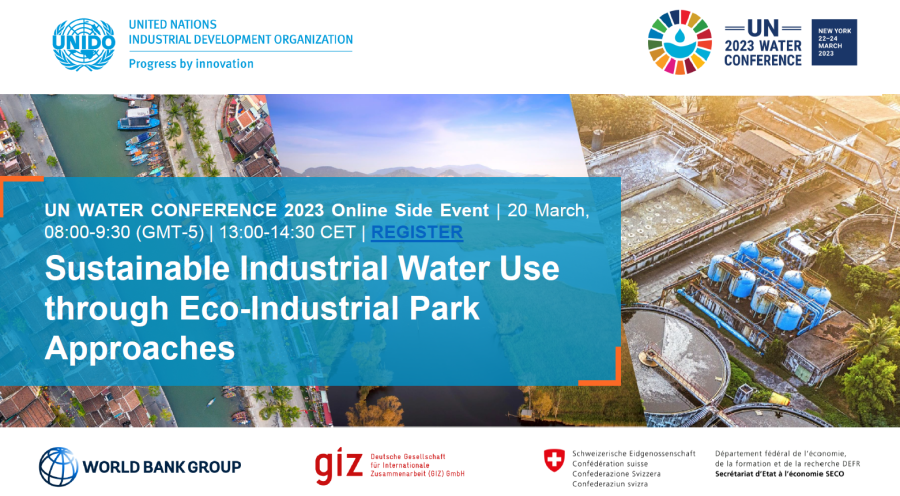
Addressing the key theme “Water for Sustainable Development”, this side event will explore how Eco-Industrial Parks can be a key lever for the sustainable use of water in industry. Indeed, Eco-Industrial Parks (EIP) involve the holistic development of industrial areas towards circular economy, resource-efficiency, sustainability, risk reduction and resilience.
Water management is a key feature of the EIP approach, with criteria ranging from increased re-use of water (industrial effluents and rain water) and requirements to develop physical networks of reuse/ cascading of water. Moreover, a key tenet of an EIP is that they must not negatively impact local water sources or access to water by surrounding communities. Thus, all industrial wastewater must be treated to applicable environmental standards and 25 % of the water is required to be reused or recycled.
Water stewardship for more resilient industrial parks
Organized by the United Nations Industrial Development Organization (UNIDO) in partnership with the World Bank Group and GIZ, with the support of the Swiss State Secretariat for Economic Affairs (SECO), this session will feature presentations on activities promoting sustainable water use in industrial areas followed by concrete examples of the implementation of Eco-Industrial park approaches in Indonesia, Bangladesh and South Africa.
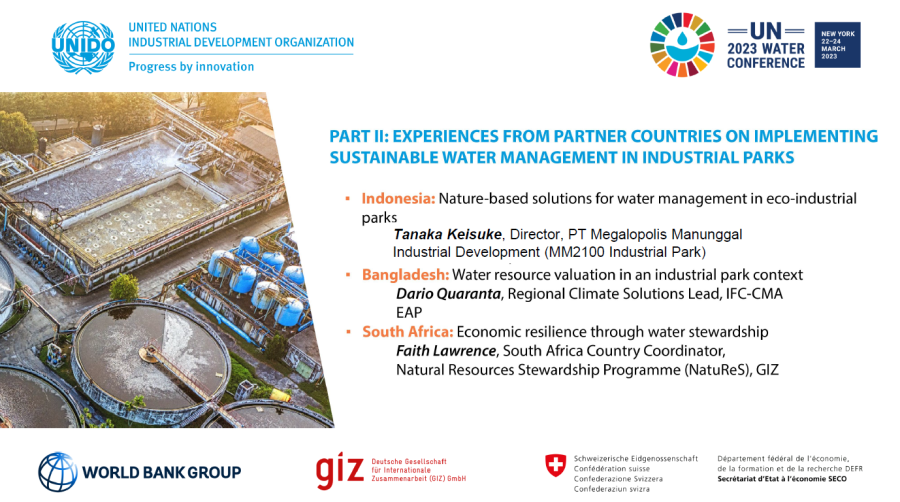
On behalf of NatuReS, Dr. Faith Lawrence, Country Coordinator for NatuReS in South Africa, will present about “Economic Resilience through Water Stewardship”, sharing experiences from implementing sustainable water management in industrial parks from South Africa.
The session will take place on 20 March, 2023 from 08:00-9:30 pm (GMT-5/NY) | 13:00-14:30 CET.
The Lake Hawassa catchment in Southern Ethiopia is prone to erosion due to the property of the soil and the topography of the area, however immensely exacerbated by human activity. The expansion of small- and large-scale farms, conversion of wetlands into various land uses and rapid expansion of population and unplanned settlements have resulted in accelerating land degradation – and by consequence siltation of the lake due to sediments being washed into the water.
Partners under the Protecting Lake Hawassa Partnership are collaborating since 2018 to protect the lake from siltation and pollution. Copyright: GIZ
Stakeholders from public authorities, private companies and civil society have joined forces in 2018 under the “Protecting Lake Hawassa Partnership” to reduce risks affecting the lake collectively across sectors. One task force under the partnership promotes afforestation and soil erosion control measures to tackle the erosion and land degradation challenges.
Training 40 households on beekeeping and the creation of their own businesses
The training included the processing of bee wax. Foundation sheets were printed and fixed into frames by trainees. Copyright: GIZ/Bezuayehu Gebremichael
To increase the impact of ecosystem services from the newly forested areas, as well as to provide local communities with alternative income opportunities which are not damaging the environment – the area is threatened by widespread illegal sand mining- partners have upscaled apiculture activities. Previously, ten households had received three beehives each under the partnership, increasing communities’ income opportunities. Creating alternative livelihoods like apiculture or fruit production is an essential part of partnership activities, as environmental protection can only be successful in the long term if local communities either make a living from them or can generate income in an alternative way. An additional forty households were hence trained in beekeeping and business skills and provided with necessary equipment like modern beehives through the partnership. The forty households will also be supported in organising themselves into a cooperative for marketing their honey products as a group, increasing their market power.
Encouraging women towards apiculture
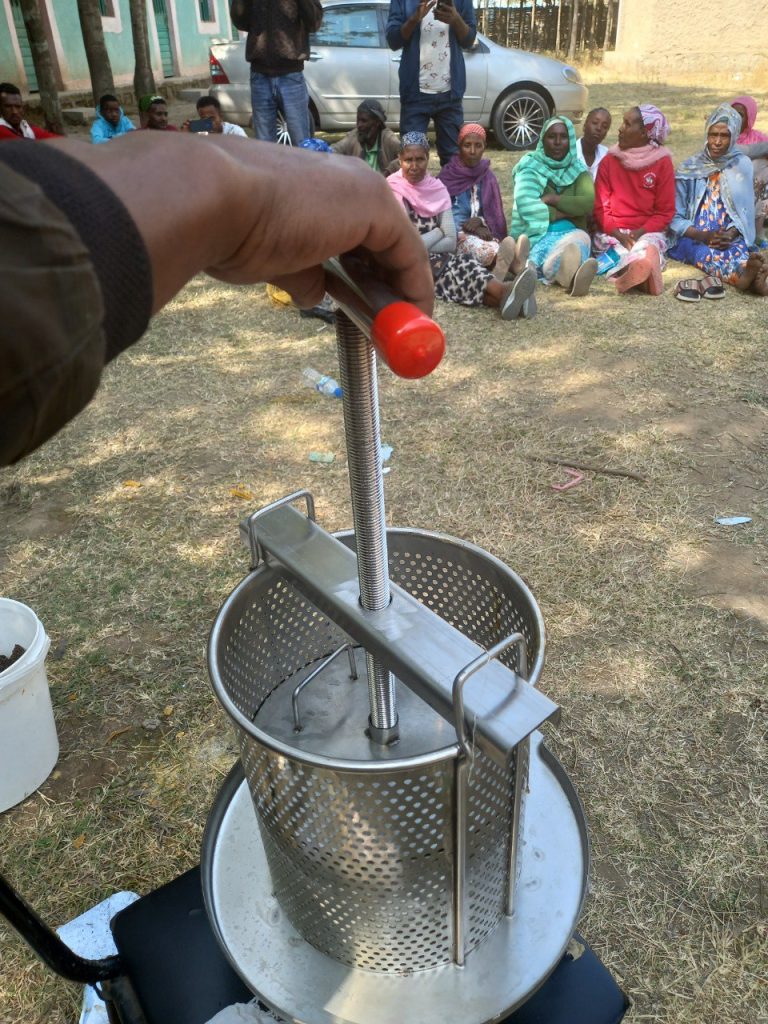
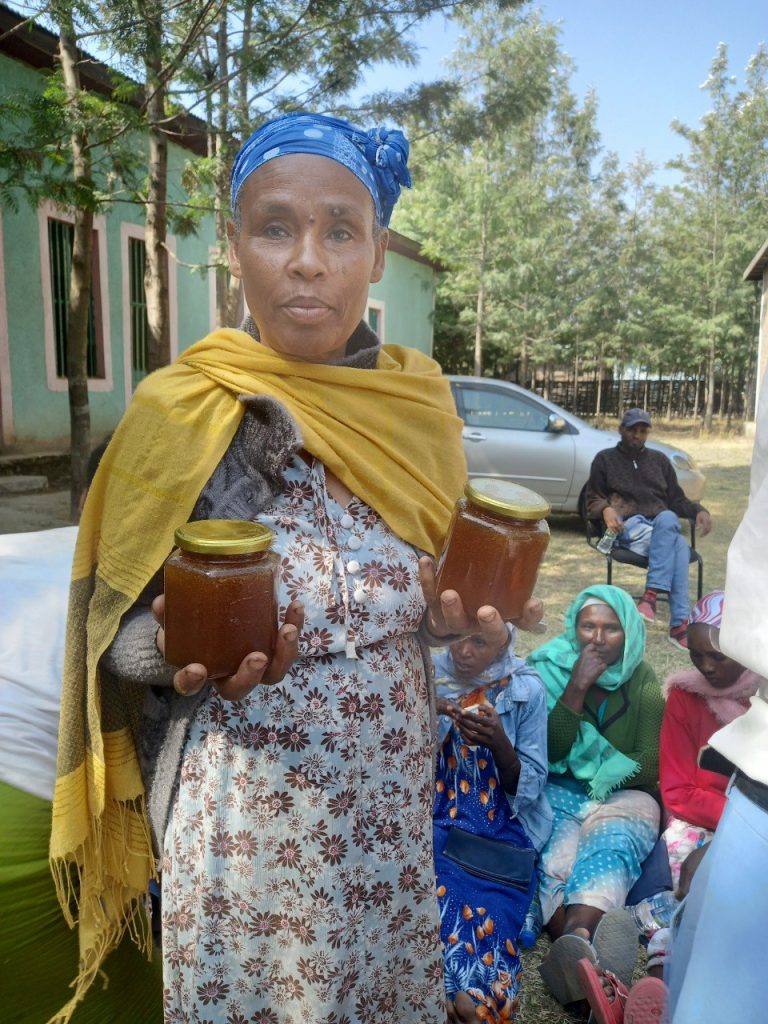
Compression and processing of honey. Copyright: GIZ/Bezuayehu GebremichaelA participant presents the final honey to the other participants. Copyright: GIZ/Bezuayehu Gebremichael
Experts from the Wereda Livestock and Fisheries Office took the lead in organizing the apiculture training, selecting and inviting trainees. The training was held at Hawassa Zuriya Wereda, Dore Bafano town, and was divided into two rounds of a seven-day training between 28th November and 19th December 2022. Two people attended from each of the 40 farmer households over the two rounds. 30% of the selected trained households are led by women, and it was key to reach as many female trainees as possible with the training, as women bear a significant share of work while being often excluded from decision-making processes. During the training, women were actively participating, interacting as well as answering questions from other participants. Several of them pointed out that they will be committed to irrigating bee floras and monitoring their bees daily.
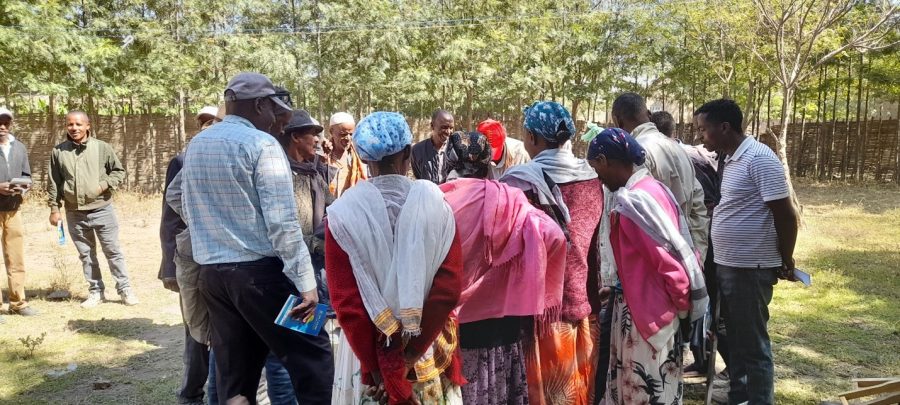
Trainees are sharing experiences in one of the working groups. Copyright: GIZ/Bezuayehu Gebremichael
Theoretical sessions contained technical aspects of apiculture like the pollination process or the importance of flora calendars. The larger part of the training however consisted of practical sessions, in which participants familiarized themselves with the beekeeping equipment, learnt how to process beeswax, how to manage a swarm, dividing and uniting colonies, curing diseases and processing honey.
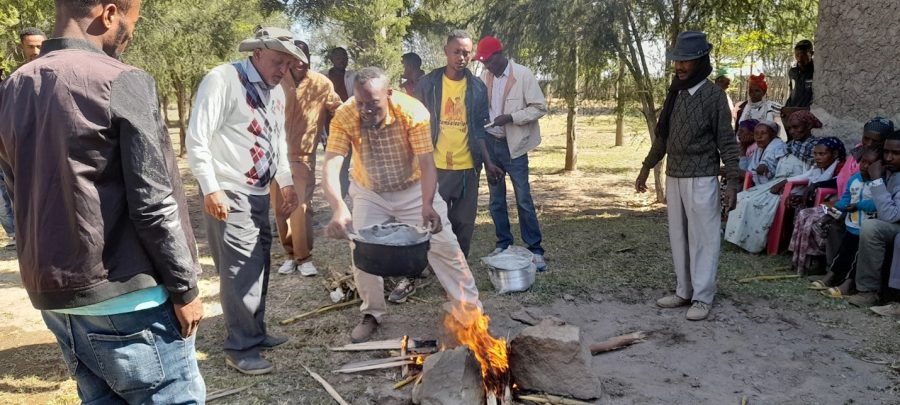
The correct processing of beeswax was an important part of the training. Copyright: GIZ/Bezuayehu Gebremichael
Necessary skills to establish honey cooperatives
During the practical sessions, the participants worked for example on melting and processing beeswax, printing casting moulds, and foundation sheets. They also discussed their personal experiences and learnt from each other during group exchange sessions.
Part of the training was also capacitating trainees to establish a honey producing and processing cooperative. Hence, in groups they developed action plans which include the set-up of selecting committees, business plans, and a concrete way forward for the cooperative. Every group presented their action plan to the rest of the members. The collective production, processing and selling of honey through a cooperative is essential for communities to establish themselves on the market and negotiate fair prices for their products.
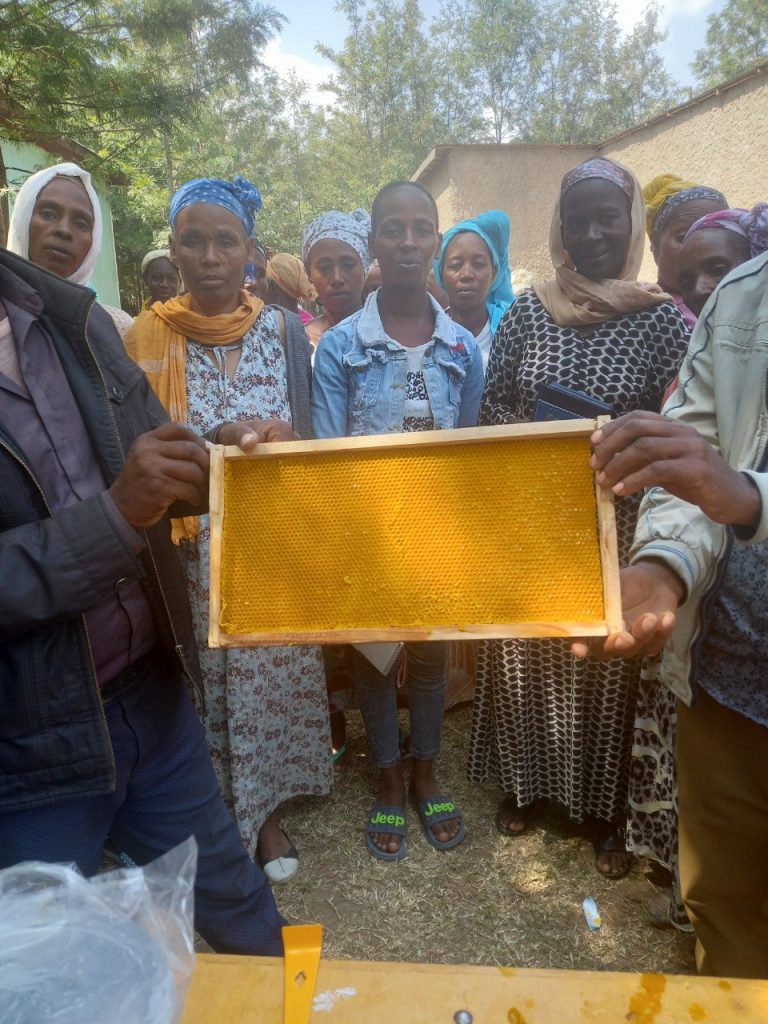
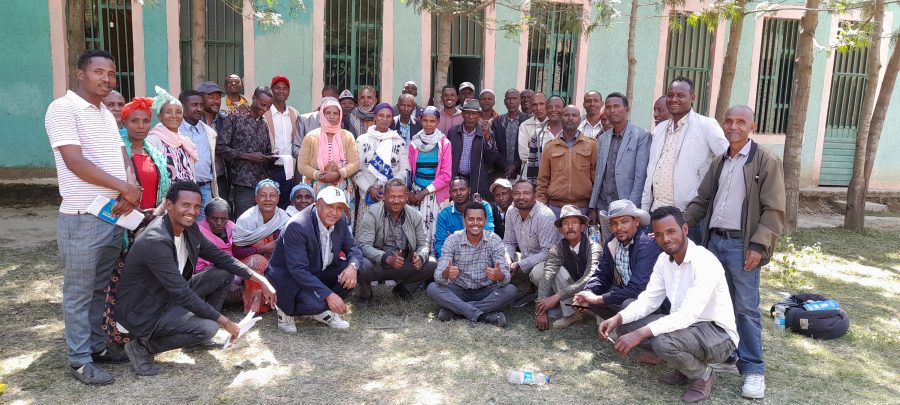
Group photo of the trainees, an apiculture trainer, as well as experts from the Wereda livestock and fisheries office as part of the Protecting Lake Hawassa Partnership. Copyright: GIZ/Bezuayehu Gebremichael
Diverse livelihoods make resilient communities
Communities basing their income on diverse livelihoods are more resilient towards natural disasters, climate change or other unpredictable events. They are able to manage the available natural resources in a more sustainable way, allowing them to make a living from the environment while preserving it for future generations. Protecting Lake Hawassa partners strive to improve the joint management of natural resources around Lake Hawassa, for enhanced economic development and improved livelihoods of local communities.
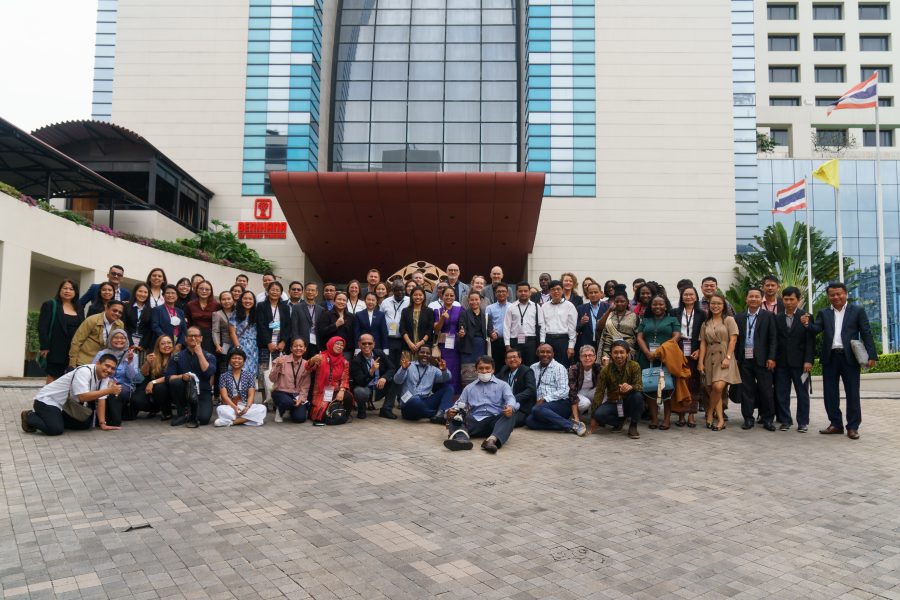
The regional learning event participants pose for a group photo. Copyright: GIZ
The “Fit for School” programme, commissioned by the German Federal Ministry for Economic Cooperation and Development and implemented by Deutsche Gesellschaft für Internationale Zusammenarbeit (GIZ), aims at improving pupils’ access to safe drinking water, sanitation and hygiene. The programme held its regional conference 2022 on 22nd – 24th November in Bangkok, Thailand. The main goal of the event was to consolidate the wealth of learning gleaned from the last eleven years of implementation, while providing partners with a forum to explore ideas for regional and global collaboration on water, sanitation and hygiene (WASH) in schools and related emerging thematic areas.”
“Fit For School” has supported Ministries of Education in the Philippines, Indonesia, Cambodia and Laos in their rollout of national policies, implementing guidelines, and monitoring systems for WASH in schools since 2011. Since 2021, the “Fit for School Africa Initiative” has extended this support to different African countries, adapting the successful approach to the respective contexts on the ground. Among others, the programme has extended its support to Zambia by supporting the implementation of Phase 4 of the Safe Back to School campaign under theLusaka Water Security Initiative(LuWSI).
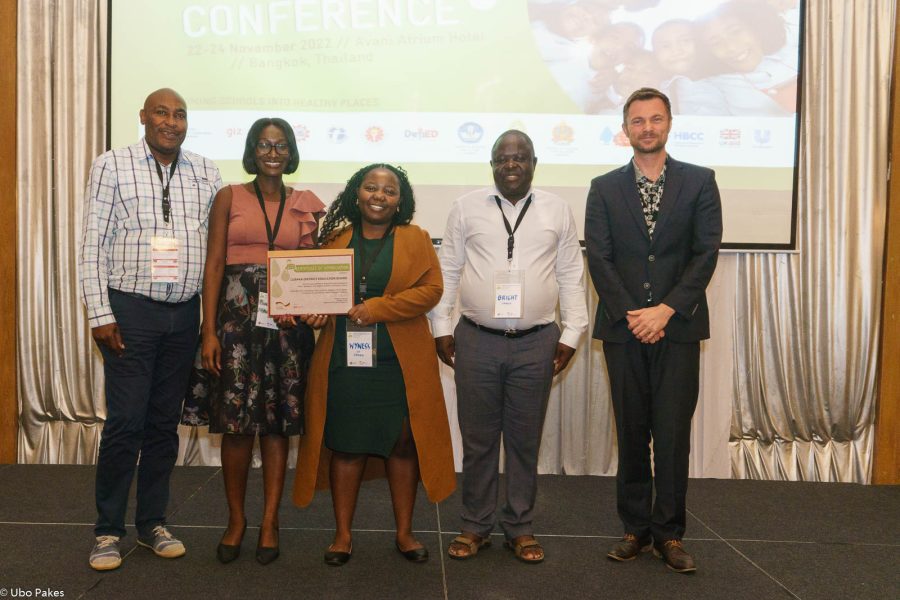
A delegation from Zambia, including the Town Clerk for Lusaka City Council, the District Education Board Secretary, the program manager from Water Aid Zambia and an advisor from GIZ NatuReS attended the conference. Also in attendance were representatives from Malawi, South Sudan, Philippines, Indonesia, Cambodia and Laos.
The Zambian delegation receiving a certificate of attendance. Copyright: GIZ
The learning event offered an opportunity to foster a stronger exchange between different African and Asian countries facing similar challenges, and to enable them to draw lessons from each other’s experiences and tools. This exchange stimulates and facilitates sustainable scaling-up of “WASH in School” programming in their respective countries.
Collaborative approaches to natural resources governance enable accountability and equitable allocation of resources between competing demands, as can be the case between upstream and downstream water use needs. GIZ’s Natural Resources Stewardship (NatuReS) programme provides facilitation and strategy in setting up cross-sectoral stewardship partnerships for Tanzanian stakeholders to jointly analyze and address natural resources risks, aiming at generating social, environmental and economic benefits.
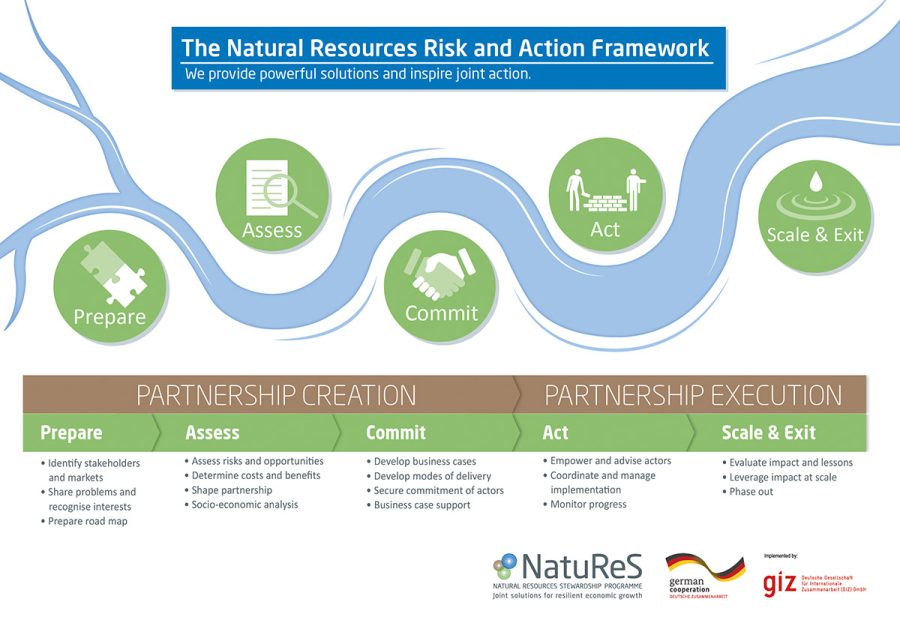
The programme developed the Natural Resources Risk and Action Framework (NRAF) as a five-phased participatory process to enable stakeholders from businesses, communities, and governments to tackle shared environmental risks together.
Setting up Stewardship Partnerships in Tanzanian River Catchments
Stewardship partnerships supported by GIZ-NatuReS are built on the understanding that natural resources are better managed through cross-sectoral collaboration. Leveraging the resources and capacities of every sector, the availability and integrity of these resources can be ensured in the long term. Partnerships are established through a step-by-step inclusive process, guiding partners in tackling shared environmental risks in a participatory manner. The aim is to reduce classical silo working systems by accompanying public, private, and civil society sector in identifying joint risks and supporting them in developing joint solutions to reduce these risks. Under this framework, NatuReS Tanzania acts as a neutral broker – supporting partners in working together to find mutually beneficial solutions for sustainable economic growth and the continued use of precious natural resources (Richards et. al, 2022).
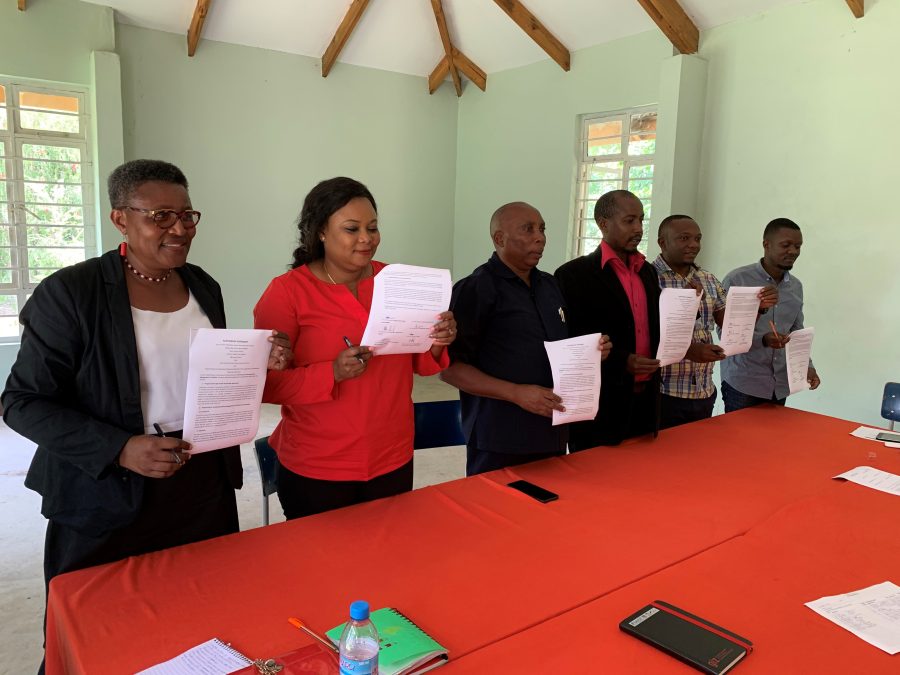
Partners under the Sustainable Water Management Partnership (SUWAMA) in Usa River, Northern Tanzania, during the signing of their Partnership Action Plan. Copyright: GIZ/Aristarick Mkenda.
Enhancing Inclusive Participation in Water Resources Governance
NatuReS in Tanzania has enhanced inclusive participation within the supported partnerships by ensuring the equal involvement and representation of all stakeholders in the discussion, planning and decision-making processes in natural resources management. To enable cross-sectoral collaboration, good leadership and coordination mechanisms are of paramount importance. Therefore, the key added value the partnership approach brings to natural resources management is improving the communication and coordination between various users, who are otherwise often not communicating or even hostile towards each other. The regular good governance meetings that partners under the Sustainable Water Management Partnership (SUWAMA) held prior to the Covid-19 pandemic and steering committee meetings that continue to date are examples of these joint fora. In these meetings, participants exchange about how regulators’ roles and responsibilities can be harmonized to increase results-based decision-making, collaboration between sectors can be enhanced, and compliance to environmental regulations be better enforced.
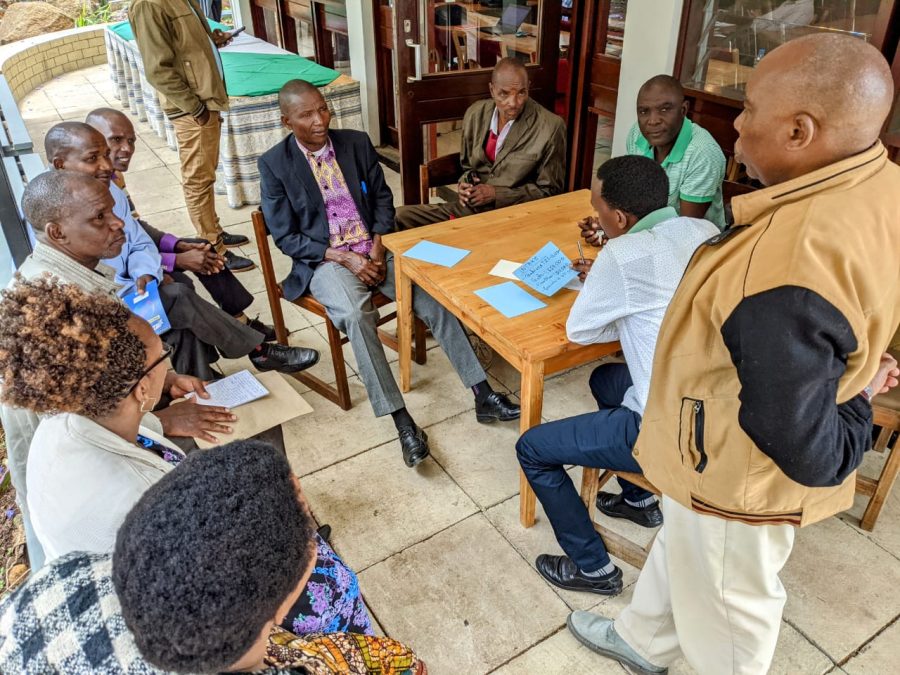
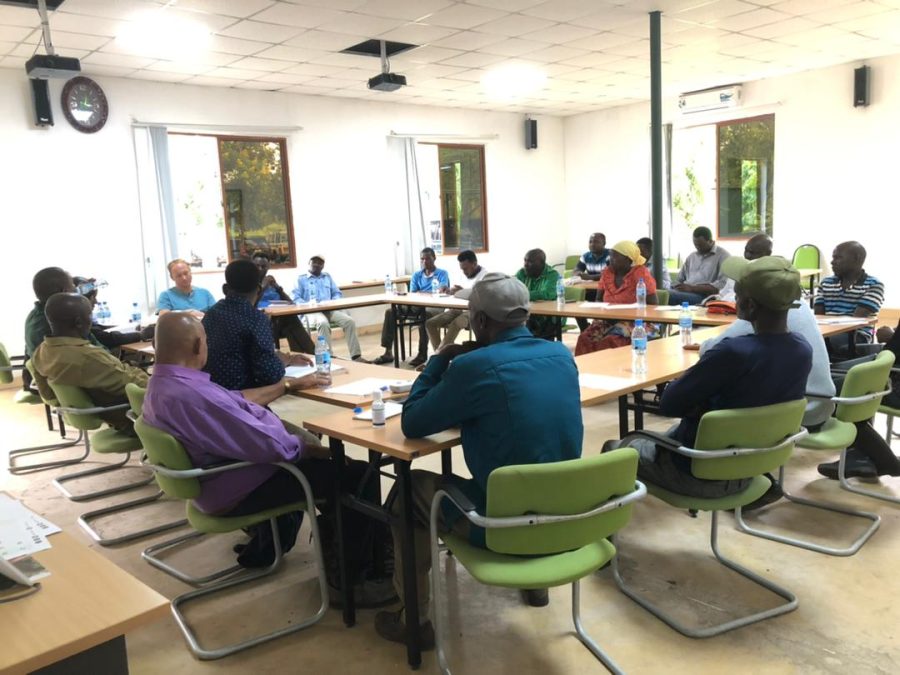
SUWAMA Partners in Usa River, Northern Tanzania, discussing governance issues in the sub-catchment. Copyright: GIZ/Adelaide Mkwawa.
Strengthening Civil Society Organizations
To improve communities and civil society participation, NatuReS has continuously supported the capacitation of Water Users Associations (WUAs), who were previously inactive. WUAs are legal entities stemming from the Water Resources Management Act of 2009. They act as “small water boards” at the community level and are designed as the lowest participative organizations for water resources management within defined basins. Covering segments of watersheds, they are broadly responsible for water conservation activities, conflict management over water issues, and water allocation to irrigators through a permitting system. They are mandated by the Water Act and respective basin boards to bring up the issues of water users at the basin level. As “the eyes and ears” on the ground for the basin offices, they are particularly insightful in managing conflicts over water allocation and know the livelihood activities of local communities.
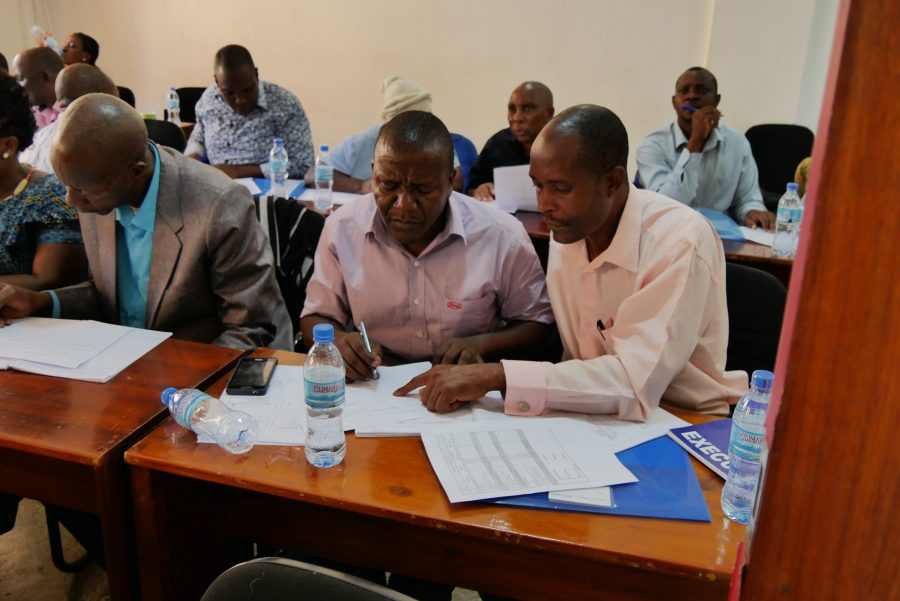
Water Users Association members participating in a Financial Management training. Copyright: GIZ/Ebrania Mlimbila.
As a WUA leader, I was inspired to join the partnership after seeing the challenges of working with a large group of water users. The partnership has worked by bringing together investors, water users and other diverse stakeholders. We know what everyone is doing, where water is being abstracted from and for what purpose. Furthermore, water users are now conversant with the various governance structures responsible in taking care and overseeing the available water sources. Prior to joining the partnership, Water Users Associations and the Pangani Basin Water Office would constantly be accused of not equitably distributing water among beneficiaries. Through improved coordination, stakeholders now understand their roles and responsibilities in taking care of this precious natural resource.
– Tito Kitomari, Upper Kikuletwa WUA Leader
NatuReS undertook a capacity assessment of the WUAs, identified areas for enhancing their capacity, and provided trainings within the areas of Catchment Conservation – enabling them to play a greater role in sustainable catchment conservation and management; Financial Management – supporting them in managing the finances of their institutions; as well as Leadership and Governance – to build their capacity on strategic leadership, focusing on governance and community leadership roles.
Water resources issues concern everyone in the community, therefore involvement [participation] is crucial. Partnerships provide a platform where stakeholders discuss these issues and help us to come up with more powerful solutions.
– Karim Kimaro, Weruweru WUA Secretary
Steering Private Sector Funds towards Water Resources Management
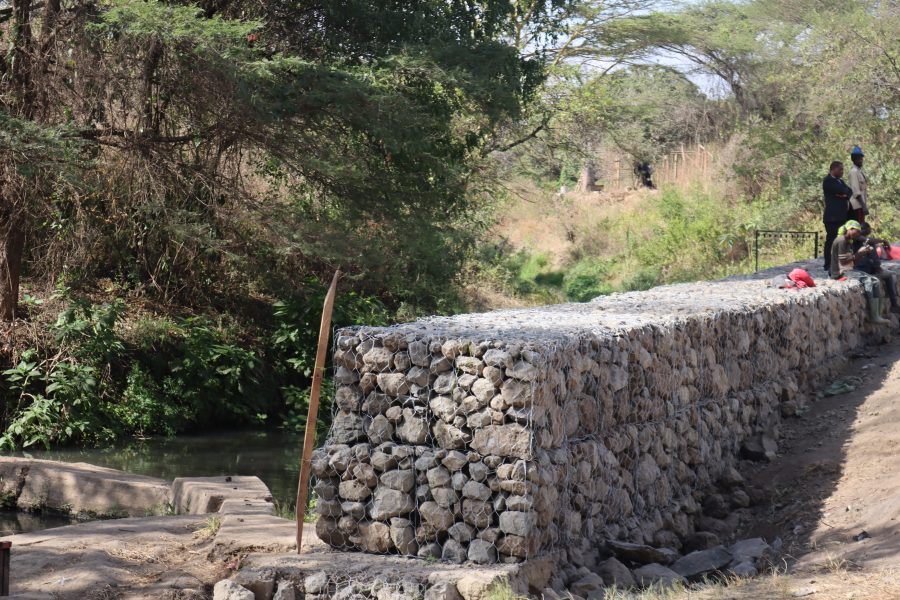
Gabions installed at the DOMIKWA irrigation furrow intake. Copyright: GIZ/Ebrania Mlimbila.
Under partnerships following a stewardship approach, businesses go beyond their corporate social responsibility by making in-cash and in-kind contributions to partnership activities, leveraging funds for public sector to adequately manage natural resources. A good example is the DOMIKWA irrigation furrow structural rehabilitation in the Usa River sub-catchment. The furrow, located along the Usa River, is one of the main furrows supplying water in the area. Partners joined forces to rehabilitate it after its structure had severely deteriorated over time. In-cash and in-kind contributions of 38.5M and 10M Tanzanian shillings were pledged by private sector and furrow members, respectively. The private sector procured most of the construction materials and covered all the labor costs.
Without effective collaboration between government agencies, businesses and communities, it is impossible to make these activities [water resources management] sustainable.
– Abraham Yessaya, Community Development Officer, PBWB
DOMIKWA furrow structural rehabilitation discussions between public sector, private sector and civil society. Copyright: GIZ/Ebrania Mlimbila.
Availability and good quality of natural resources like water, soil or air are key to livelihoods and economies. Their scarcity, endangerment or mismanagement can provoke conflicts. Innovative approaches like natural resources stewardship offer an opportunity to address shared risks and develop joint, inclusive and long-lasting solutions for water-stressed catchments such as the Pangani Basin in Tanzania.
Maintaining a 7-kilometer-long river stream is too much to handle for one company alone. It is difficult to monitor issues such as water theft, structural issues and vandalism at the furrows and water source. As a beneficiary, Dekker Chrysanten believes that collective action is necessary to resolve water challenges. Addressing water risks becomes easier as the responsibility to maintain the river stream is equitably shared amongst stakeholders.
– Gabriel Steven, Flower Transporter and Breeding officer, Dekker Chrysanten