Since its establishment in 2018, the Protecting Lake Hawassa Partnership (PLH) is working in the Ethiopian Hawassa sub-catchment to mitigate the environmental and social risks affecting the lake. Through the partnership, various activities have been implemented in the lake Hawassa sub-catchment, leading to improvements of both environmental and social aspects.
A short video showcasing PLH activities in the Lake Hawassa sub-catchment.
The stewardship approach promotes collective action to ensure the sustainable management of natural resources. The partnership achievements of PLH are motivating its members and inspire others to join the stewardship journey.
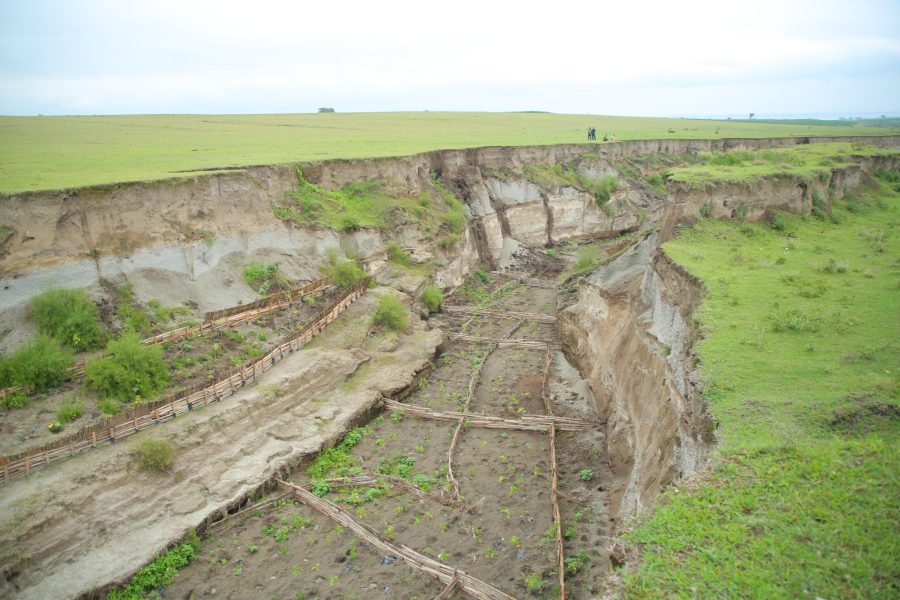
Ecohydrology as an innovative, low-cost approach to soil erosion control has been embarked on in the Lake Hawassa sub-catchment by the Protecting Lake Hawassa partnership (PLH). This approach, due to its multiple benefits, became a preferred option among farmers over conventional soil erosion control methods.
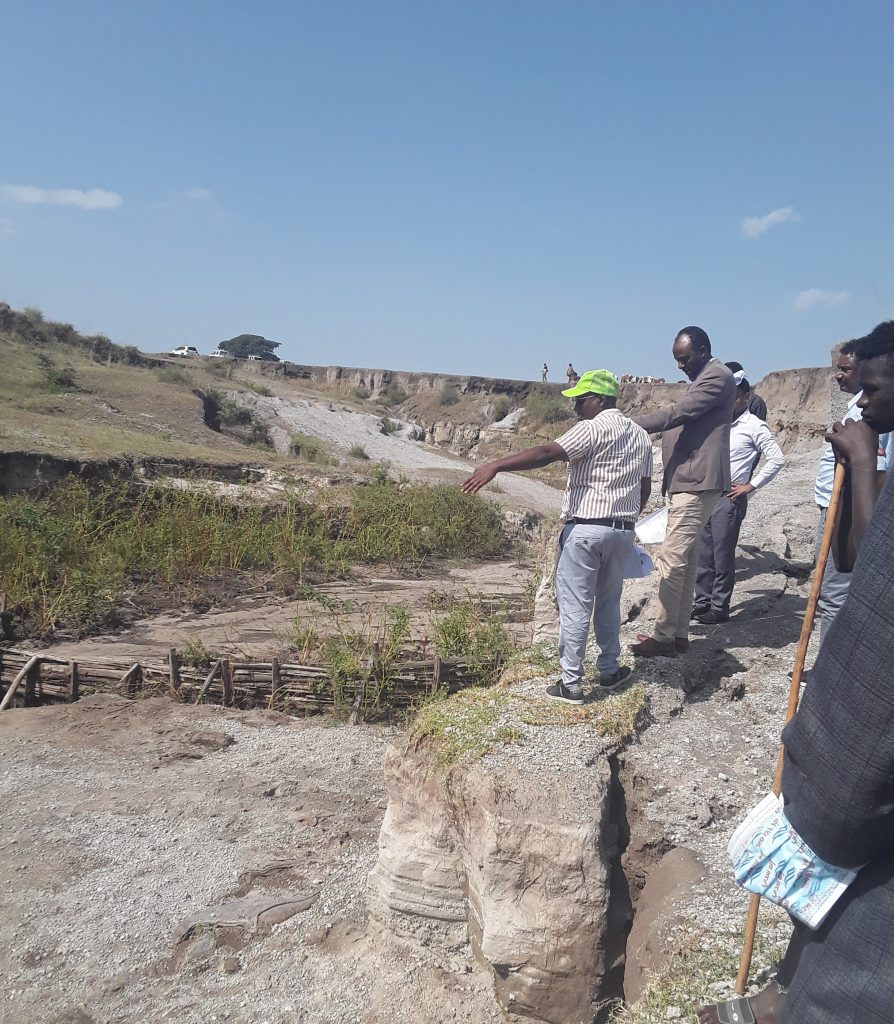
The Ethiopian Minister for Water and Energy, His Excellency Dr. Eng. Habtamu Itefa, visited one of the PLH project sites in Shalla Woreda on 15 November 2021. He was joined in the official visit by State Minister Dr. Abrham Adugna and the former Minister for Water, Irrigation, and Energy, Mr. Motuma Mekassa, as well as other higher officials. The visit was initiated by a mutual interest of the Ministry and Rift Valley Lakes Basin Office (RVLBO), aiming at showcasing successful projects in the basin. During the visit, the Minister pointed out that the project is very eco-friendly and successful in managing the increasing challenges of landscape degradation.
H.E. Dr. Eng. Habtamu mentioned that the technology has the potential to be scaled at national level after additional piloting in other parts of the rift valley basin. The government officials also acknowledged the suitability of the technology for the Grand Ethiopian Renaissance Dam (GERD) in providing multiple ecosystem services and sediment reduction. The technical manual “Ecohydrology-Based Landscape Restoration” developed with a collaborative effort of Hawassa University and PLH was highly appreciated by visitors. The Minister stated that this manual shall be nationally harmonized and officially adopted by the Ministry of Water and Energy, as well as the Ministry of Agriculture, for wider circulation and implementation.
Studies indicate that by 2050 there will be more plastic in the oceans than fish. To sustainably counter the negative impacts of plastic on our environment and health, action is needed on all levels, with major improvements to waste management and recycling practices being pivotal to counter the current trends.
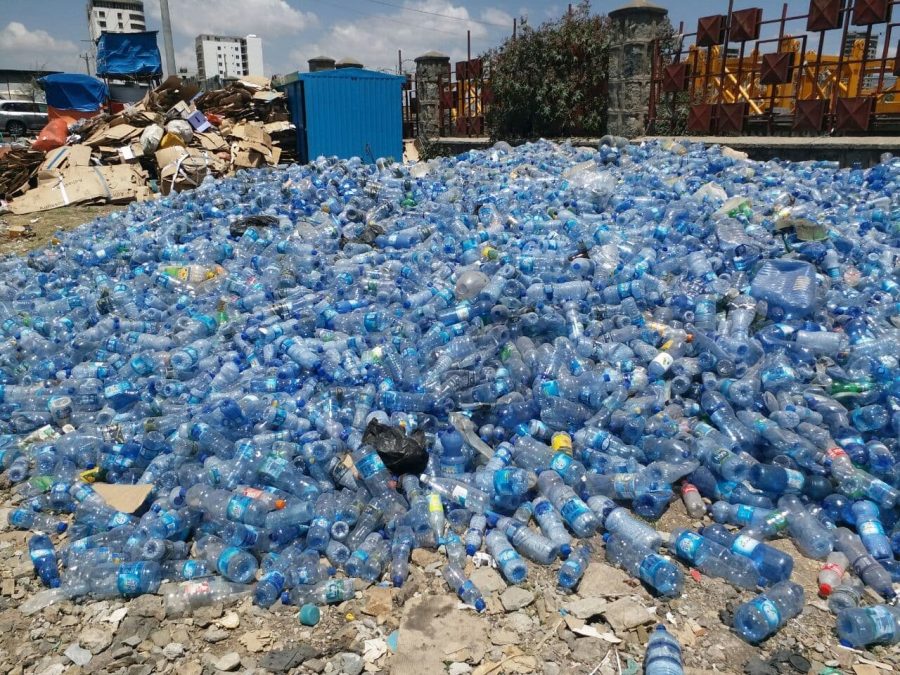
In Addis Ababa, plastic accounts for 15% of the total waste. PET, used mainly for water and soda bottles, makes up 41% of the total plastic waste generated in the city. Plastic pollution is a common problem in the city, and drainage channels are often clogged with plastic, including many PET bottles, increasing the risk for floodings.
Collected PET plastic at one of the collector association’s working stations, near the new stadium in Addis Ababa Copyright: GIZ
Improving the collection and recycling of used plastics can contribute to alleviating plastic pollution in the city. However, many factors impede the efficiency of plastic collection and recycling. Among them are high transportation costs of unbaled plastics, a lack of space for waste collectors to sort already collected waste, as well as no access to electricity, which would allow collectors to scale up their operations by using baling machines.
Manual baling machines to improve PET collection
To counter these challenges, NatuReS has partnered up with Irish Aid and the Addis Ababa Solid Waste Management Agency (SWMA) on a project to design and pilot manual baling machines. The aim is to improve PET collection. Baling PET significantly lowers the costs to transport plastic to processors. At the same time, waste collectors receive a 40% premium when selling baled PET. The manual baling machine, which is cheaper to procure and operate than its electric counterpart, will incentivize waste collectors to collect more PET, contributing to cleaner streets while creating additional employment opportunities in the plastic value chain.
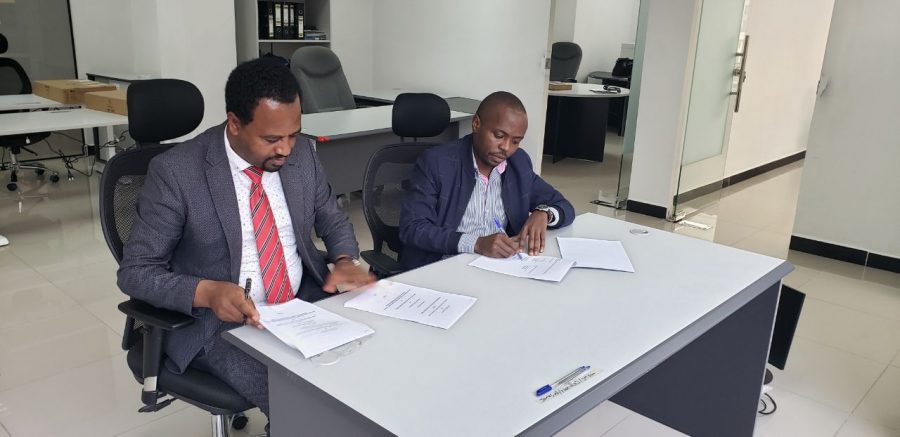
Signing of the Memorandum of Understanding (MoU) by Dr. Eshetu Lemma, General Manager of the Addis Ababa Solid Waste Management Agency, and James Njeru, NatuReS Country Coordinator Ethiopia (from left to right) Copyright: GIZ
The use of wetlands for water pollution control dates back to the ancient Chinese and Egyptian civilizations. Wetlands reduce water pollution by removing pollutants coming from surface waters. Constructed wetlands (CW) provide sustainable, low cost, robust and efficiently engineered systems for water treatment, with added ecosystem services.
Since its construction in 2013, Amora Gedel (Eagle’s Valley) CW has been serving to improve the quality of storm water discharging into the lake Hawassa. Amora Gedel was constructed as a joint project by the Hawassa City Administration and the World Bank in Hawassa City. Due to increasing wear-and-tear, human activities, inadequate operation and maintenance over the years, a general overhaul was much needed. Protecting lake Hawassa (PLH) members identified the CW as one of the priority action areas.
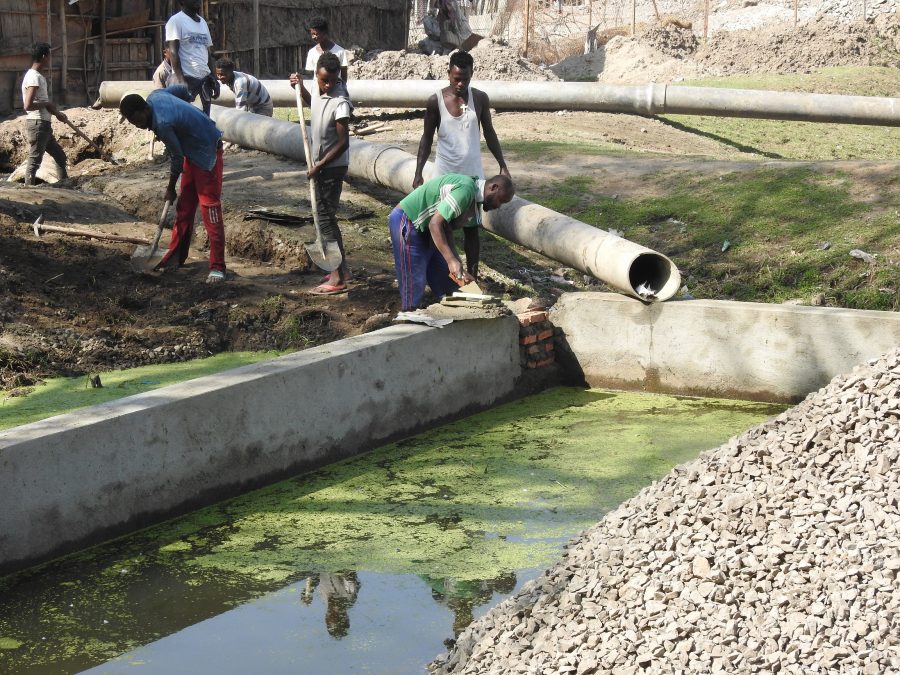
Rehabilitating Amora Gedel constructed wetland to reduce pollutants entering Lake Hawassa Copyright: NatuReS Ethiopia
Joint action
Earlier this year, NatuReS and the Hawassa Municipality embarked on rehabilitating the Amora Gedel CW. The rehabilitation is part of the PLH Partnership activities. Pooling resources together, NatuReS took the responsibility over the renovation works. Ensuring the long-term sustainability and functionality of the CW will be a task overseen by the municipality.
An Ethiopia-based wastewater construction company is conducting the rehabilitation and supervised by Aquacon Engineering consultants. The Municipality also provided operators for maintaining the CW once rehabilitated. A team from the Municipality, Acquacon, NatuReS and community representatives will carry out the inspection and follow-up work.
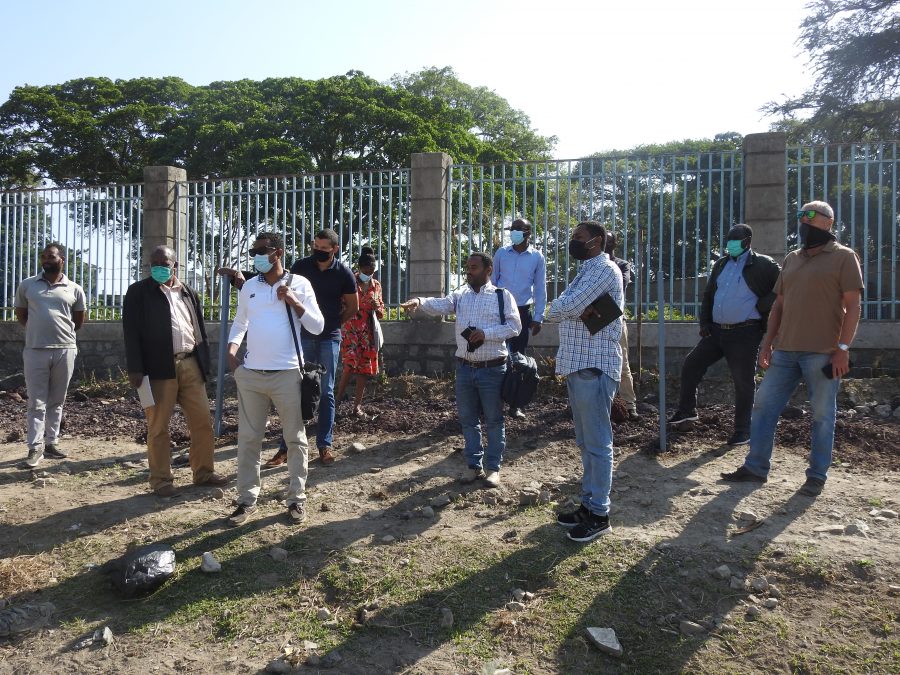
PLH members visiting the construction site Copyright: NatuReS Ethiopia
The Rift Valley Lakes including Lake Hawassa are currently experiencing a rise in water levels. Amora Gedel rehabilitation is facing challenges from this water level rise, as it results in a mix of lake and storm water. Considering this phenomenon, NatuReS and its partners are acting to reduce the risk and make the CW climate-proof. Raising the whole water treatment ponds by 50cm and rerouting the inlet deliver channel is the action taken to address this risk.
Nature-based solution
Restored to its former glory, the Amora Gedel CW will again be able to treat the first flash of storm water from the city’s drainage channels. This is important, as the first flow is the most polluted, sweeping away dust and garbage from the drainage channels towards the lake. The municipal staff will be collecting large particles such as plastic bottles trapped by the trash rack. Through a biological process, the smaller pollutants, including heavy metals, will be filtered from the water in the CW. This process will make use of aquatic plants (i.e. reeds, duckweed), naturally occurring microorganisms and a filter bed (sand, soils and gravel). The completion of the CW will be right before the start of the rainy season in June.