Stewardship Multi-Stakeholder Partnerships Regional Exchange – Partnering towards a Circular Economy in Ethiopia 

Stewardship multi-stakeholder partnerships as a catalyst for change  

Hosted by partner representatives from the “Partnership for Circular Value Chains in Addis Ababa” in collaboration with the NatuReS team Ethiopia, a two-day regional exchange event in Addis Ababa aimed to showcase how multi-stakeholder partnerships can act as vehicles for collective action for a circular economy.  

Members of partnerships that are supported by GIZ NatuReS from Tanzania, South Africa and Zambia came to Ethiopia to learn more about the approach on plastic value chains and circular economy taken in Addis Ababa.

Group picture of participants in the regional exchange. ©Tinsis Media

Promoting Circular Solutions: Partnership for Circular Value Chains

A common threat to natural resources that all countries are facing is the pollution of resources like water and soils from waste. Therefore, solutions are needed that transform the economy from a linear approach to a more circular one. The regional exchange event showcased solutions along the recycling value chain for plastic that were developed within the Partnership for Circular Value Chains in Addis Ababa, Ethiopia.  

On the first day of the event, the introduction and overview of the partnership and its members was followed by various presentations from partners sharing important insights from different sectoral perspectives. 

Key topics ranged from private sector engagement and circularity policies to gender inclusivity in circular initiatives, exploring the roles of multi-stakeholder partnerships in supporting women-owned MSMEs.  

Panelists from left to right: Ms. Mihret Teclemariam (PETCO ET), Dr. Ayele Hegena (PETCO ET), Mr. Kidus Asfaw (Kubik), Mr. Anteneh Sileshi (Soil and More Ethiopia), Ms. Bezawit Eshetu (ACEN Foundation). ©Tinsis Media  

During a sectoral exchange among public, private, and civil society stakeholders, participants were able to exchange on challenges and opportunities, best practises and lessons learned from their respective contexts.

From theory to practise – Field visit along the plastic value chain

To get a better understanding of how the partnerships´ circular economy approach looks like in practise, the participants of the regional exchange event embarked on a field visit journey along the plastic value chain on the second day of the event.  

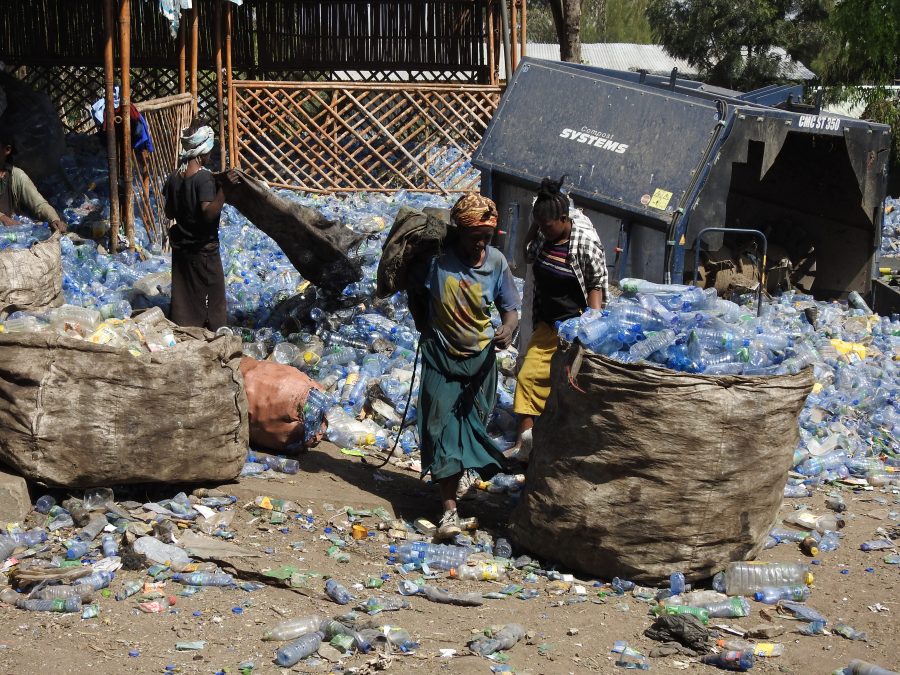
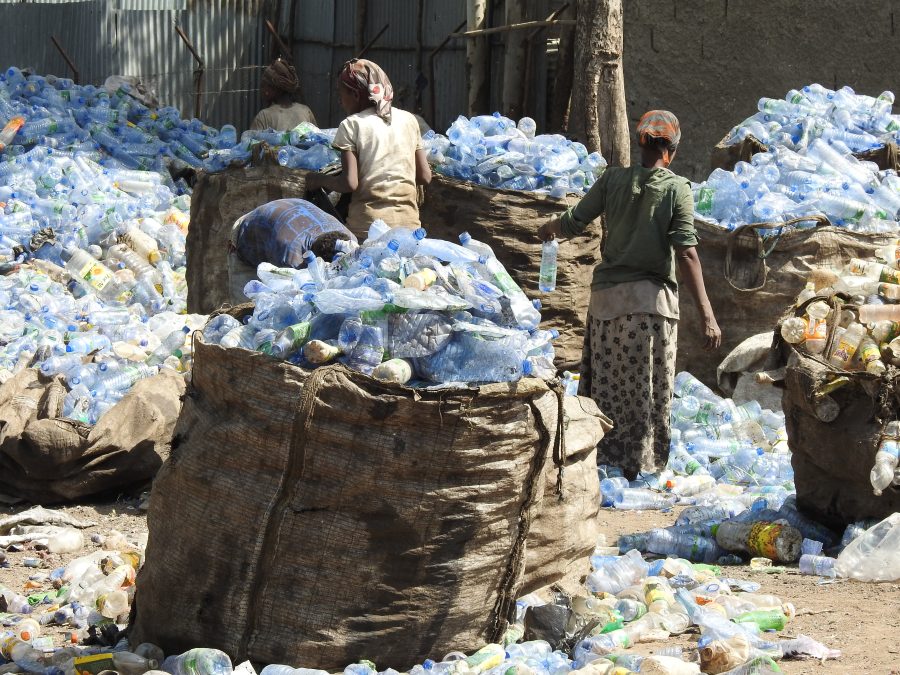
The first stop was a waste transfer station. Due to insufficient separation of waste at the household level, waste collectors bring all sorts of waste to the transfer station where it is separated. Instead of going directly to landfill, valuable materials such as plastic can be extracted and are sold for recycling. By increasing the efficiency of waste management, the amount of waste that ends up in the environment is significantly reduced.  

Visit of a waste transfer station. ©Tinsis Media

Much of the plastic that is collected are PET bottles. The bottles are shredded into plastic flakes which can be used as a raw material for new products. Through creating business linkages, provision of trainings for small and micro scale enterprises on business skills, and provision of waste management equipment, the partnership promotes and supports a transformation from linear to circular value chains.  

Waste collectors are separating waste that was brought to the transfer station. ©Tinsis Media

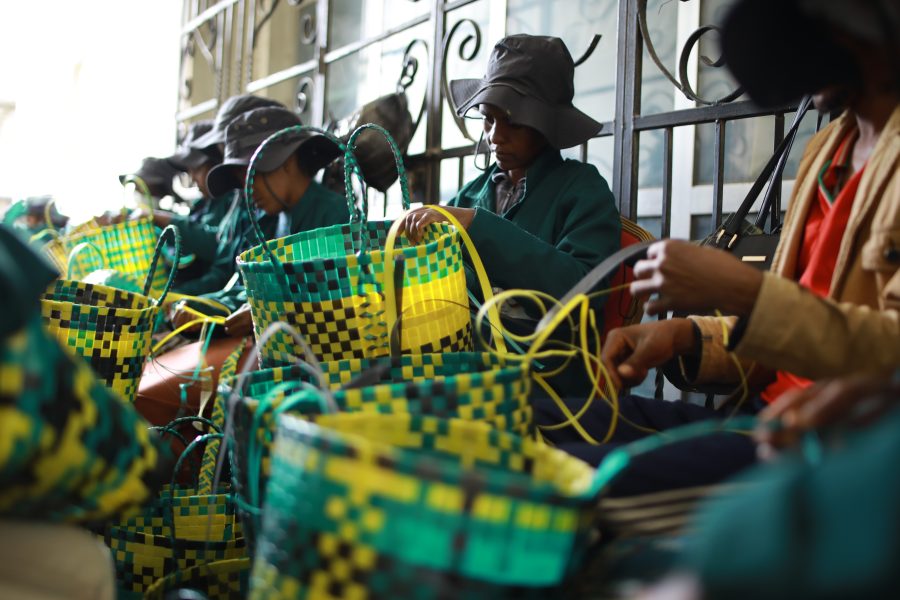
The transformation towards a more circular economy must be socially just, taking the rights and needs of all societal actors into consideration to leave no one behind. The partnership supports women who use the recycled plastic that was collected in the transfer station to create their own businesses and generate a basic income through selling upcycled products, such as shopping baskets. These new opportunities significantly increase the women´s quality of life and enables them to have access to basic services.  

Women weaving baskets from recycled plastic. ©Tinsis Media

The private sector also has a strong interest in innovative, sustainable solutions to address the waste problem and to contribute to a circular economy. During the field trip, participants visited the production side of the private company Kubik, a member of the Circular Value Chains partnership, to learn how they use plastic waste to produce building materials for houses, made entirely from recycled plastic.  

Participants of the regional exchange event at the Kubik production site. ©Tinsis Media 

Looking ahead

The opportunity to connect with actors that face similar challenges during the two-day regional exchange was very valuable for all partners. The regional exchange event not only enabled them to network, share and learn together, but also sparked ideas to kickstart the replication of the NatuReS stewardship approach in other circular economy related partnerships across the region within the NatuReS partner countries. Through ongoing exchange and sharing of experiences, stakeholders from all sectors will continue to develop partnerships that can support the transformation towards a circular economy.  

Learn more about the Partnership for Circular Value Chains Addis Ababa here.

Reviving Lake Hawassa’s Ecosystem: The Partnership’s Efforts to Combat Land Degradation

The Threat to Lake Hawassa’s Ecosystem

Ethiopian Lake Hawassa is a beautiful body of water surrounded by lush vegetation and wildlife. The lake serves as a critical source of livelihood for local communities, providing fish, irrigation water, and employment in tourisms for the surrounding areas. Unfortunately, the ecosystem of the lake has been under threat for years due to increased sedimentation, nutrient pollution, and waste accumulation. 

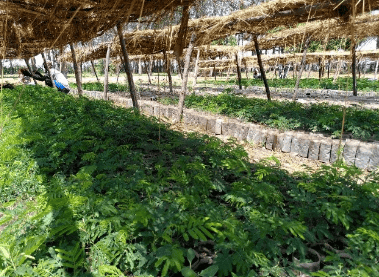
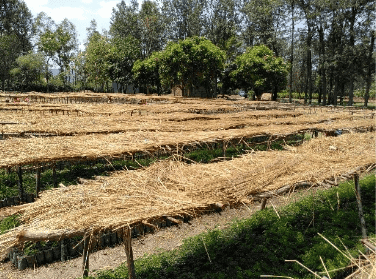
Protecting the ecosystem of Lake Hawassa requires collective action from different sectors. One major activity of the Protecting Lake Hawassa Partnership is planting trees to reduce soil erosion and restore the ecosystems in the catchment. Currently, 1.5 million tree seedlings of different local varieties are being raised in nurseries, and in the next three months, these will accompany the one million trees already planted under the partnership. 

Figure 1 and 2 show a tree nursery growing seven different types of trees for afforestation in the Lake Hawassa catchment. Copyright at GIZ / Hanno Führen

Planting Trees and Building Barriers: The Efforts of the Protecting Lake Hawassa Partnership

The harsh climate conditions and increasing periods of drought in the region call for a mix of drought-resistant trees, shrubs, and physical structures to reverse land degradation within the Lake Hawassa catchment. The Protecting Lake Hawassa Partnership is working towards this goal by planting trees and erecting physical barriers based on ecohydrology principles designed in collaboration with the local University of Hawassa. 

Reversing Land Degradation: The Success of Collaborative Action

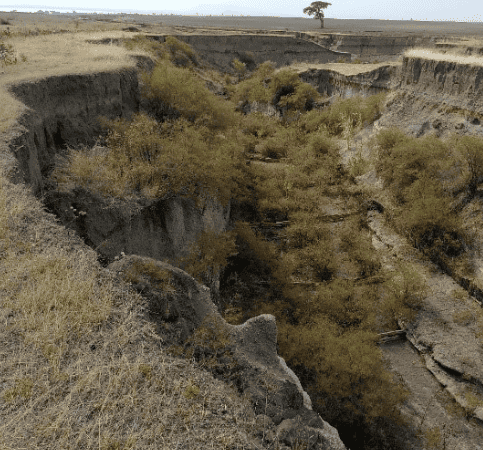
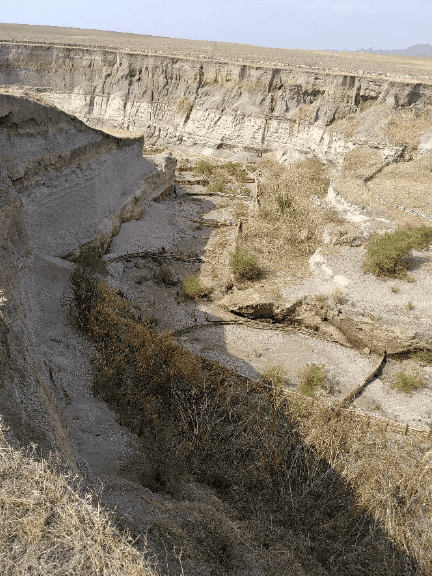
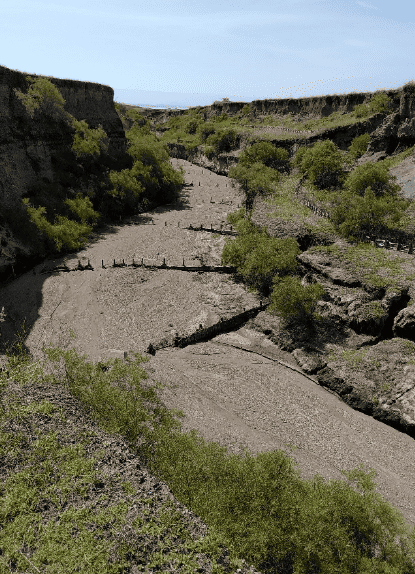
One success story of the partnership is the increasing vegetation cover of a previously completely bare gully that drains into the lake. The partnership has demonstrated that it is possible to reverse even significant land degradation by joining forces and taking action. However, reforestation techniques must always respond to the local needs and conditions. 

Working with Local Communities: The Partnership’s Approach to Restoration

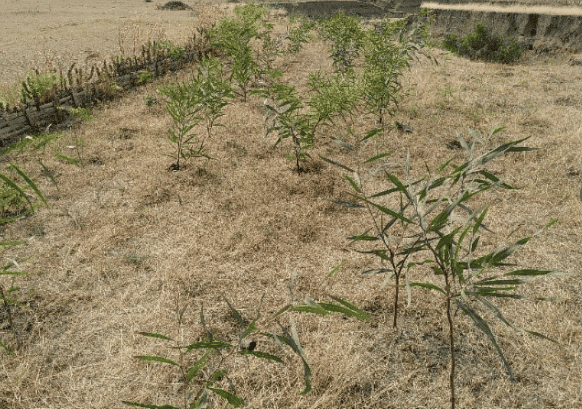
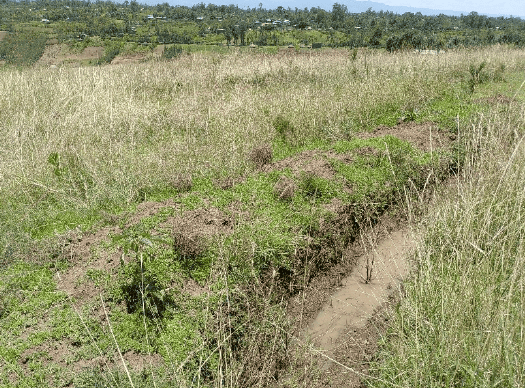
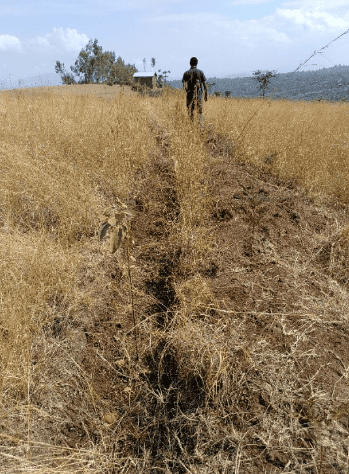
The partnership is working with farming communities upstream to restore bare and degraded landscapes by combining the construction of ditches to collect runoff rainwater with the planting of trees. Additionally, the community ensures that no livestock enters the protected area, allowing grass to grow and support the micro-climate needed for the trees to thrive. 

Protecting the ecosystem of Lake Hawassa is an ongoing effort that requires the involvement of multiple sectors and individuals. The progress made so far by the Protecting Lake Hawassa Partnership is a testament to what can be achieved through collective action and collaboration. By planting trees, erecting physical barriers, and working with local communities, the partnership is taking steps towards reversing the land degradation and preserving the ecosystem of the lake. 

A Call to Action: Protecting Lake Hawassa for Future Generations

It is inspiring to see what can be accomplished when different sectors come together to work towards a common goal. The Protecting Lake Hawassa Partnership is setting an example for others to follow in protecting the environment and securing a sustainable future for all. 

These pictures show the protection and afforestation of communal lands on the upper catchment of Lake Hawassa, with infiltration ditches and tree planting along the contour lines. Copyright at GIZ/Hanno Führen

women basket weaving training

Waste to value: upcycling plastics for women economic empowerment in Addis Ababa

Addis Ababa, one of the fastest growing cities in the world, is facing a constant struggle managing the ever-growing amount of waste produced across the city. Most of it is dumped on a landfill, which already exceeded its capacity years ago. This results in the pollution of water and soils, causing serious environmental and public health risks.

Waste management in the city involves collection of garbage at household level, sorting it by hand, delivering recyclable materials to wholesalers, and disposal of the rest. Plastics account for about 15,5% of the waste, and this component of the waste stream is increasingly attracting interest due to the recycling and reselling value of the material. Hundreds of small and micro enterprises (SMEs) are therefore active in this area of waste collection and separation, supplying the plastic recycling value chain.

women waste collectors
Plastic constitutes a significant part of the waste polluting the city of Addis Ababa. © GIZ/Meron Tadesse

Enhancing cross-sectoral collaboration for improved waste management

To enhance the efficiency of waste management in the city and thereby protect the environment from pollution, NatuReS supported the establishment of the multi-stakeholder “Partnership for Circular Value Chains”. The partnership offers a forum to strengthen coordination between SMEs working in the waste sector, public authorities, as well as civil society representatives advocating for environmental protection. This prevents the doubling of efforts, miscommunication and inertia that have often impeded effective waste management in the city. Together, partners defined concrete solutions and take actions to improve the plastic value chain in and around Addis Ababa.

Female waste collectors as most vulnerable part of the plastic value chain

The most vulnerable part of the plastic value chain are the waste collectors. Hundreds of people roam the city as informal waste collectors, scavenging for valuable plastics, metals, or carton. Next to these informal collectors, hundreds of formalized SMEs, employing a large number of people, collect waste from households. The price for one kilogram of PET plastic that collectors get paid by wholesalers is currently around 22 Birr (~0,38€).

women waste collectors
Women are a particularly vulnerable part of the plastic collection and recycling workforce across Addis Ababa. © GIZ/Meron Tadesse

Among the workforce of waste collectors, there are several groups of marginalized people. Many struggle to make a living from this job, facing harsh working conditions, unstable prices due to inflation and diminishing profit margins. Women are especially affected by these issues. They work all along the plastic value chain, from being collectors at household level to small entrepreneurs in the recycling business. However, in comparison to men, women are underrepresented within SMEs, as they often lack basic technical skills beyond collecting waste and are excluded from decision-making processes. 

Enhance waste management skills and business opportunities for women along the plastic value chain

Women economic empowerment along the plastic value chain in Addis Ababa. Copyright: GIZ

The partnership therefore undertakes specific efforts to support women as part of the plastic waste workforce. Currently, 100 women from 16 waste management SMEs across four Addis Ababa sub-cities are capacitated to enhance their waste management skills and increase their business opportunities.

Firstly, during a three-day training, the women are supported in developing necessary business skills to run and grow their businesses. This includes aspects such as bookkeeping, understanding and developing market linkages, as well as the development of sound business plans to enhance their income.

Secondly, during practical sessions, the women receive skill development for diversified income strategies. This focused on plastic upcycling crafts, enabling the participants to make an income beyond collecting and re-selling plastic by upcycling their collected plastic waste themselves. Specifically, the 100 women were trained on techniques for the upcycling of plastic straps out of recycled PET plastic into baskets that can be sold on local markets.  

women basket weaving training
Training of women on basket waving technique using recycled plastic. © GIZ

Partnership efforts for female empowerment and more efficient upcycling across Addis Ababa

The training is provided with technical support from “PETCO Recycling Community Organization”, a partner under the partnership. Further support was provided through human resource contributions from the public sector partner, the Addis Ababa Cleansing Management Agency. In total, the training is running for 10 consecutive days, divided in four groups in four locations, to make the content as accessible and targeted to the trainees as possible.

Through the trainings, women are empowered to create a profitable side business along the plastic value chain. Weaving straps out of collected PET plastic waste into baskets will allow the women to diversify their income, mitigate plastic waste price fluctuations and overall strengthen their position as confident part of the recycling value chain.

Planning for a more inclusive future of waste recycling

This specific technique for producing baskets from recycled plastics is only one example, and only the start. The partnership envisions the creation of market linkages between companies and the female waste workers, and the establishment of a new enterprise which will exclusively engage women in upcycling projects. From previous technical trainings provided by partners, they know that the profit margin and demand for such types of upcycling products is high.

The Partnership for Circular Value Chains in Addis Ababa is supported by GIZ’s ‘Natural Resources Stewardship Programme’. GIZ’s ‘Private Sector Development Project in Ethiopia (PSD-E)’ supports the partnership efforts by increasing the resilience of crises-affected micro- , small and medium-sized enterprises within the plastic value chain, while improving their income and employment opportunities.

Apiculture for more resilient communities around Ethiopian Lake Hawassa

The Lake Hawassa catchment in Southern Ethiopia is prone to erosion due to the property of the soil and the topography of the area, however immensely exacerbated by human activity. The expansion of small- and large-scale farms, conversion of wetlands into various land uses and rapid expansion of population and unplanned settlements have resulted in accelerating land degradation – and by consequence siltation of the lake due to sediments being washed into the water.

Partners under the Protecting Lake Hawassa Partnership are collaborating since 2018 to protect the lake from siltation and pollution. Copyright: GIZ

Stakeholders from public authorities, private companies and civil society have joined forces in 2018 under the “Protecting Lake Hawassa Partnership” to reduce risks affecting the lake collectively across sectors. One task force under the partnership promotes afforestation and soil erosion control measures to tackle the erosion and land degradation challenges.

Training 40 households on beekeeping and the creation of their own businesses

The training included the processing of bee wax. Foundation sheets were printed and fixed into frames by trainees. Copyright: GIZ/Bezuayehu Gebremichael

To increase the impact of ecosystem services from the newly forested areas, as well as to provide local communities with alternative income opportunities which are not damaging the environment – the area is threatened by widespread illegal sand mining- partners have upscaled apiculture activities. Previously, ten households had received three beehives each under the partnership, increasing communities’ income opportunities. Creating alternative livelihoods like apiculture or fruit production is an essential part of partnership activities, as environmental protection can only be successful in the long term if local communities either make a living from them or can generate income in an alternative way. An additional forty households were hence trained in beekeeping and business skills and provided with necessary equipment like modern beehives through the partnership. The forty households will also be supported in organising themselves into a cooperative for marketing their honey products as a group, increasing their market power.

Encouraging women towards apiculture

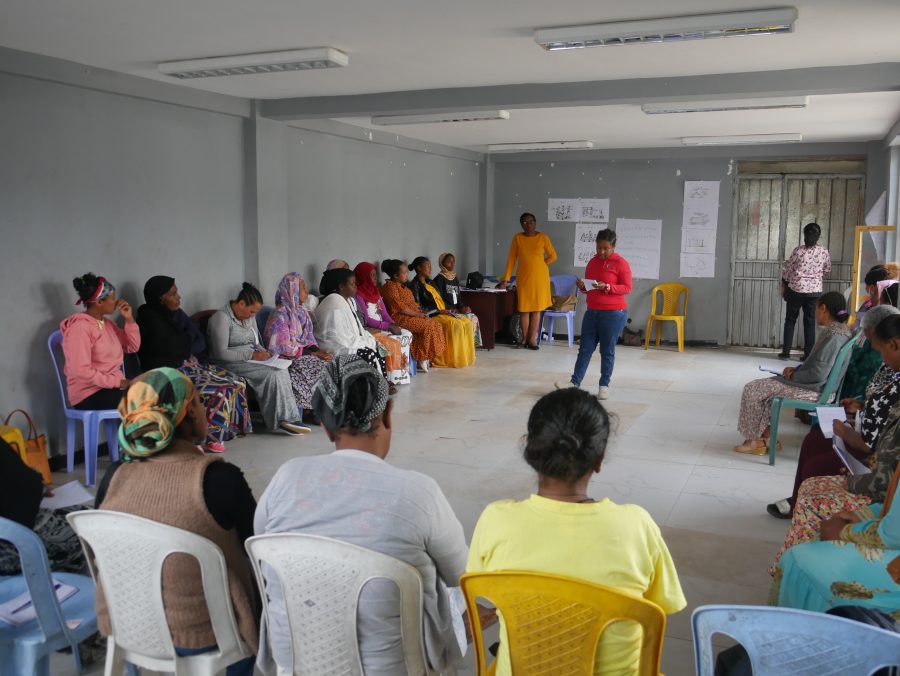
Experts from the Wereda Livestock and Fisheries Office took the lead in organizing the apiculture training, selecting and inviting trainees. The training was held at Hawassa Zuriya Wereda, Dore Bafano town, and was divided into two rounds of a seven-day training between 28th November and 19th December 2022. Two people attended from each of the 40 farmer households over the two rounds. 30% of the selected trained households are led by women, and it was key to reach as many female trainees as possible with the training, as women bear a significant share of work while being often excluded from decision-making processes. During the training, women were actively participating, interacting as well as answering questions from other participants. Several of them pointed out that they will be committed to irrigating bee floras and monitoring their bees daily.  

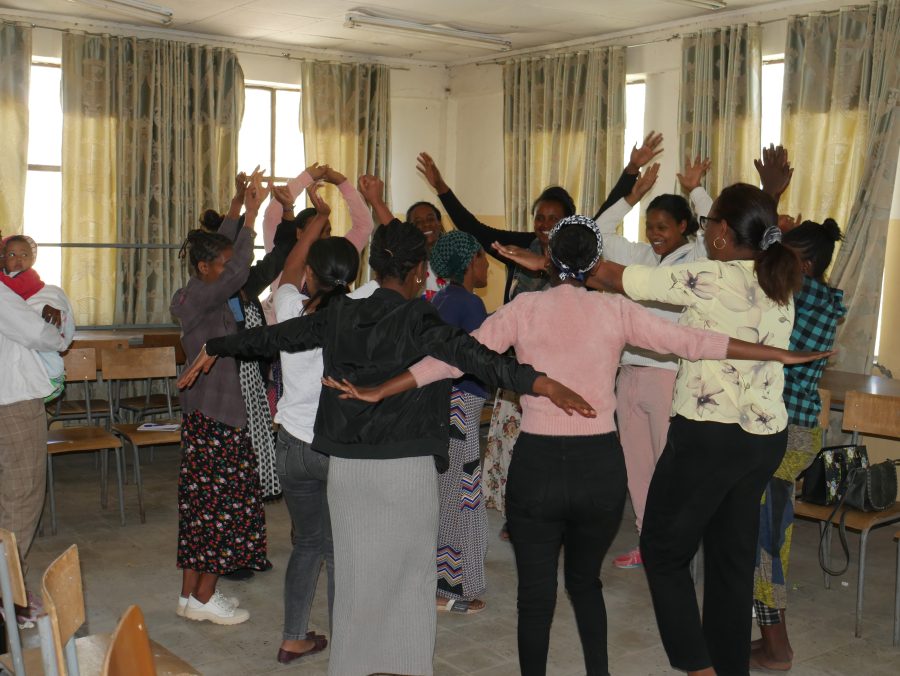
Trainees are sharing experiences in one of the working groups. Copyright: GIZ/Bezuayehu Gebremichael

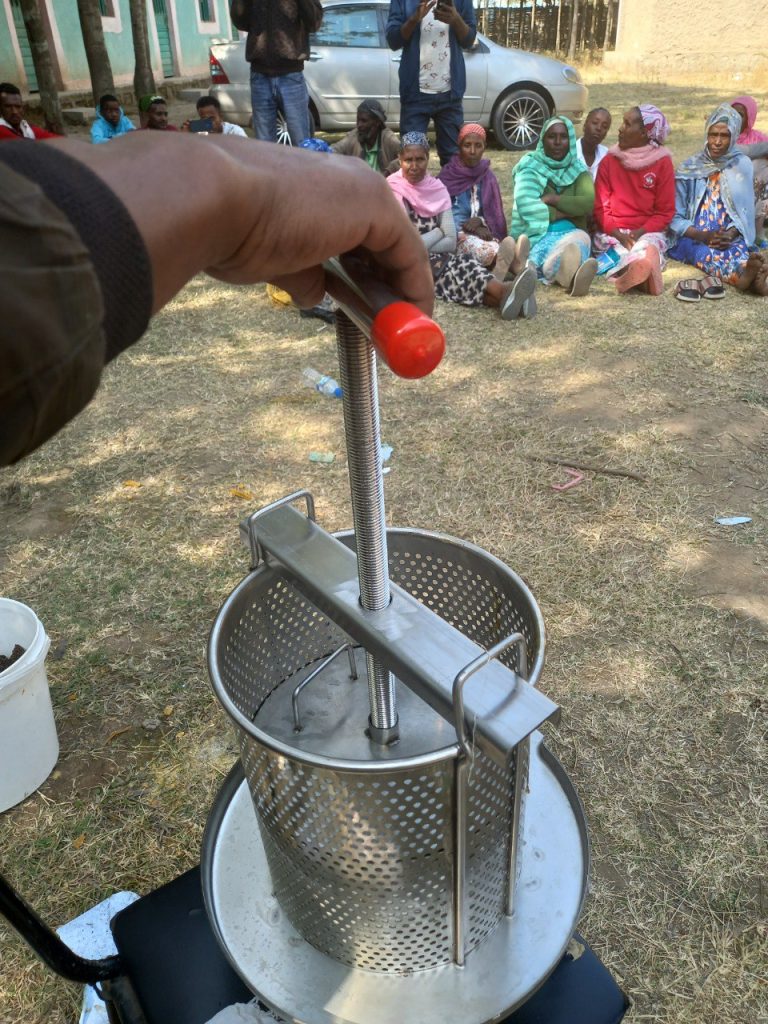
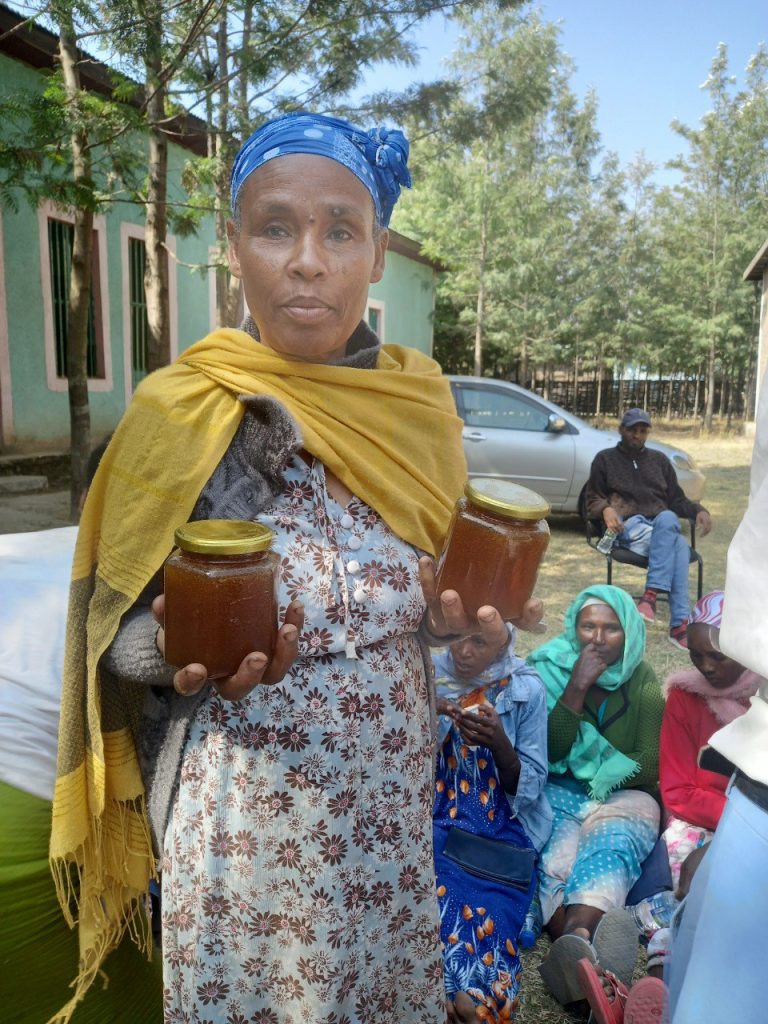
Theoretical sessions contained technical aspects of apiculture like the pollination process or the importance of flora calendars. The larger part of the training however consisted of practical sessions, in which participants familiarized themselves with the beekeeping equipment, learnt how to process beeswax, how to manage a swarm, dividing and uniting colonies, curing diseases and processing honey. 

The correct processing of beeswax was an important part of the training. Copyright: GIZ/Bezuayehu Gebremichael

Necessary skills to establish honey cooperatives

During the practical sessions, the participants worked for example on melting and processing beeswax, printing casting moulds, and foundation sheets. They also discussed their personal experiences and learnt from each other during group exchange sessions.

Part of the training was also capacitating trainees to establish a honey producing and processing cooperative. Hence, in groups they developed action plans which include the set-up of selecting committees, business plans, and a concrete way forward for the cooperative. Every group presented their action plan to the rest of the members. The collective production, processing and selling of honey through a cooperative is essential for communities to establish themselves on the market and negotiate fair prices for their products.

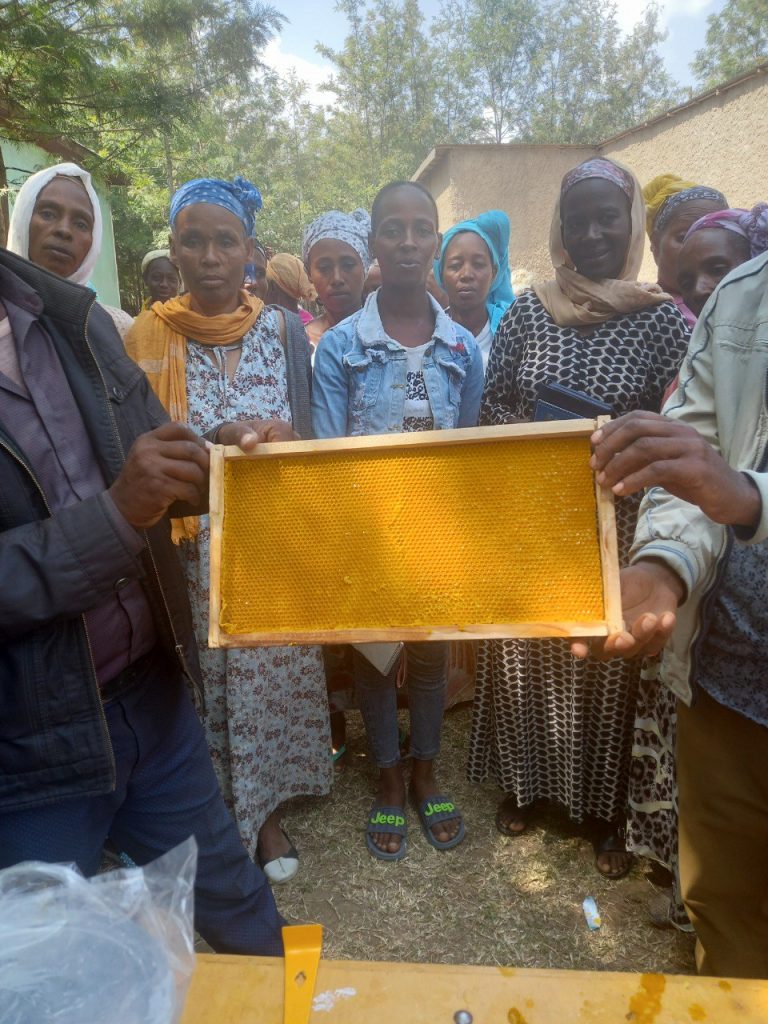
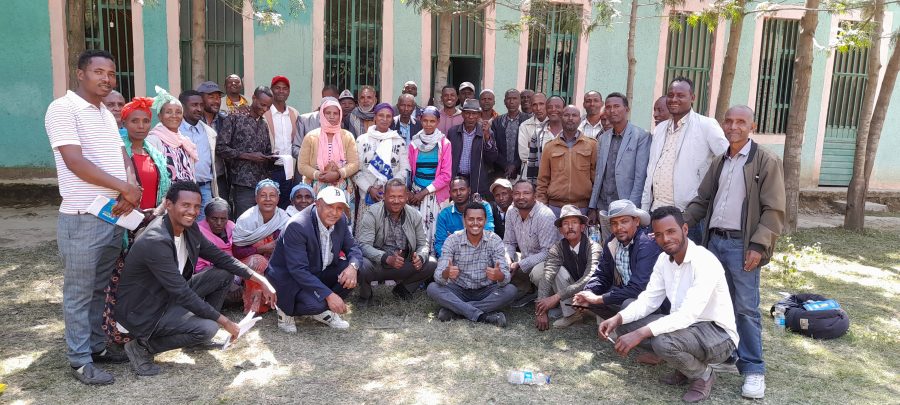
Group photo of the trainees, an apiculture trainer, as well as experts from the Wereda livestock and fisheries office as part of the Protecting Lake Hawassa Partnership. Copyright: GIZ/Bezuayehu Gebremichael

Diverse livelihoods make resilient communities

Communities basing their income on diverse livelihoods are more resilient towards natural disasters, climate change or other unpredictable events. They are able to manage the available natural resources in a more sustainable way, allowing them to make a living from the environment while preserving it for future generations. Protecting Lake Hawassa partners strive to improve the joint management of natural resources around Lake Hawassa, for enhanced economic development and improved livelihoods of local communities.