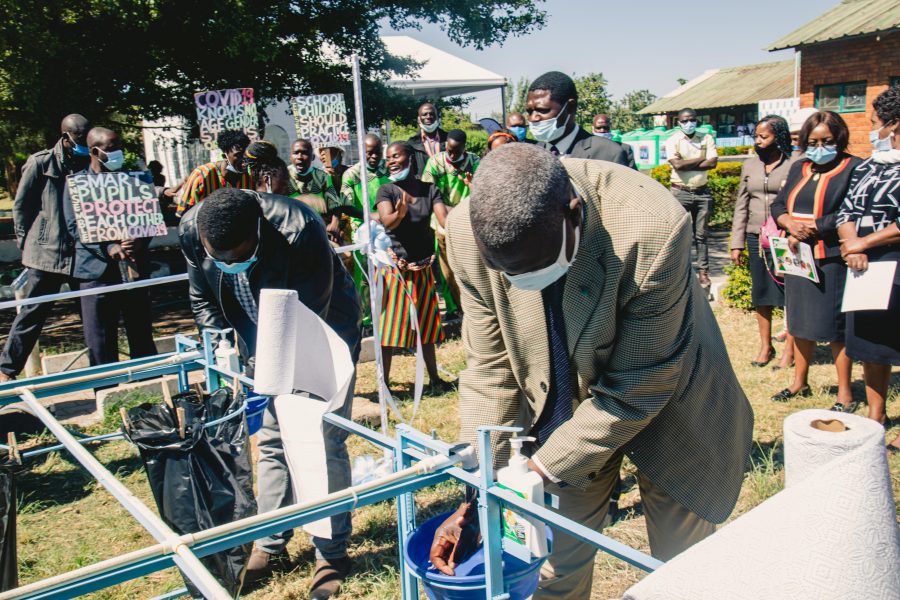
Handwashing demonstration by the District Commissioner of Lusaka Copyright: NatuReS Zambia
Lack of access to proper menstrual hygiene services such as hand washing facilities can be an obstacle for girls to attend and participate in school. With the global COVID-19 pandemic, the need for hygiene and hand wash facilities in schools has been further enforced to prevent its spread. To address this need, NatuReS Zambia, in collaboration with Lusaka Water Security Initiative, Lusaka City Council, the District Education Board, the Zambian Ministry of Health and Water Aid Zambia, officially handed over Jumbo Hand wash facilities to 58 schools under the Safe Back to School Campaign.
These Jumbo Wash stations allow many pupils to wash their hands at once, meeting the demand for handwashing facilities especially in overly populated schools in Lusaka’s most vulnerable communities. The stations contribute to a better provision with water, sanitation and hygiene services.
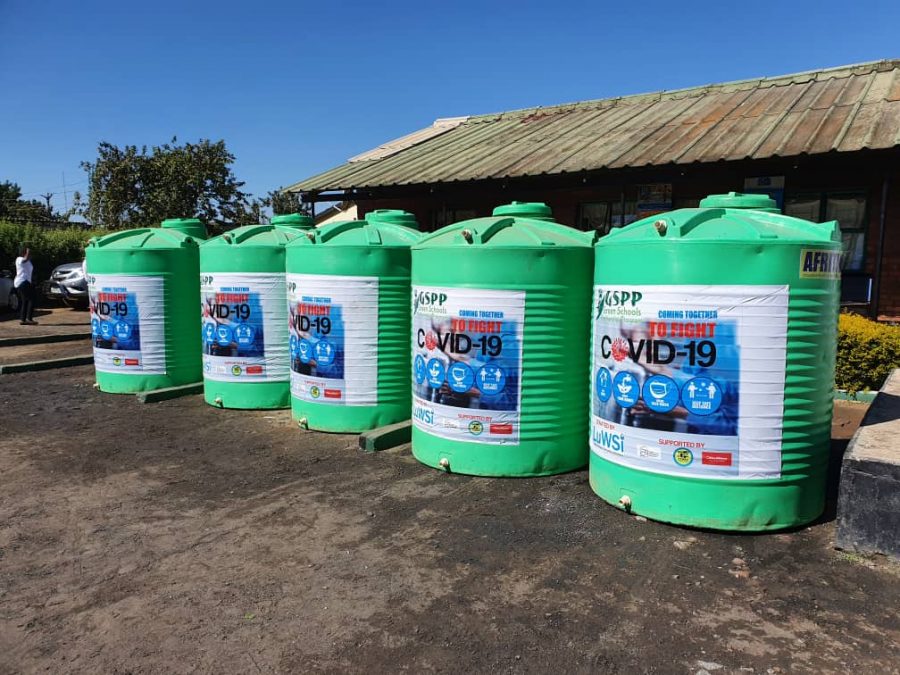
Water storage tanks awarded to schools with strong engagement on improved WASH facilities Copyright: NatuReS Zambia
The handover event took place on the 27th of May at Kasamba Combined school in Matero, Lusaka, as part of the world menstrual hygiene day commemoration. On this day, hygiene in general and the access for girls and women particularly to safe and clean hygiene facilities, is in the global focus. During the hand-over, five schools evaluated as best performers on WASH in schools guidelines, were awarded certificates. Each of these schools received a 10000-litre capacity water tank, chlorine, cleaning agents and materials, hand washing soap, sanitisers and face masks.
By improving access to sanitation in schools, the hurdle for pupils, especially girls, to regularly participate in class, is lowered. Creating safe and clean learning environments hence plays an important role in Zambia’s development.
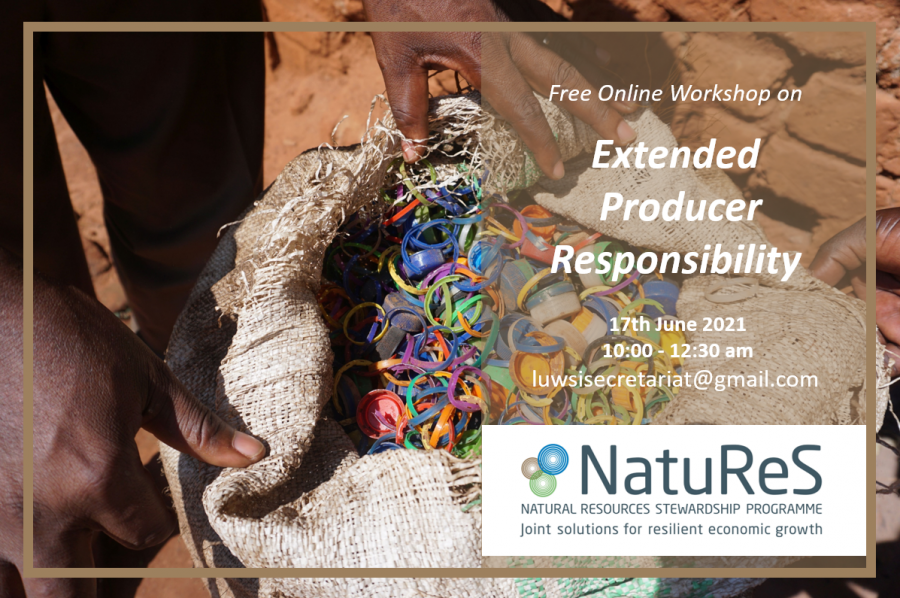
Free virtual workshop on Extended Producer Responsibility Copyright: Vanessa Tyaba
The NatuReS Zambia team and LuWSI, in collaboration with a team of specialists from BlackForest Solutions (BFS), Landbell AG and Cleanhub will be conducting a free online workshop on Extended Producer Responsibility (EPR). The purpose of the workshop is to introduce the concept of EPR, using the EPR toolbox and the concept of offsetting certificates for plastic waste, which can be seen as the first step towards EPR.
The workshop will be held on the 17th of June from 10:00 – 12:30 CAT.
Experts or firms can apply to support NatuReS Uganda on different thematic areas by July 15th Copyright: Vivian Chales
Background
The Natural Resources Stewardship Programme (NatuReS) enables public-private-civil-society partnerships to sustainably manage the natural resources they need for improved livelihoods and continued economic development. NatuReS Uganda is structured around these thematic areas: solid waste management and recycling, urban catchment management, land use and wetland management, water security, integrated urban planning, flood risk management, eco-industrial parks, knowledge and policy support, business development, green growth, and behavioural change.
Having in mind a continuous need for the involvement of experts, GIZ NatuReS invites experts or firms to submit their applications for inclusion in a roster of external experts to support the programme. The expert areas of interest include:
Expert area 1: Knowledge and Policy Support
Masters or PhD in Environmental Economics, Development Economics, Urban Development, etc.
Minimum 10 years of practical post graduate experience in policy analysis in relation to green growth, integrated urban planning, circular economy, water and environment, among other things.
Experience in policy analysis and preparation of policy recommendations to suit all actors
Expertise in economic and cost benefit analyses, costing of interventions, and developing proof of concepts focusing cross most of NatuReS thematic areas.
Proven policy dialogue and integrative skills – engaging in policy discussions, integrating divergent viewpoints into coherent strategies, and translating broad policy objectives into concrete development actions.
Expert area 2: Capacity Building and Training
Master’s degree in communication, Psychology, Mediation, International Relations and/or development, Sociology, Organizational Development, Development Politics, etc.
Minimum 8 years’ experience in facilitation, moderation, and conducting and/or coordinating trainings, workshops, and retreats of small and large groups
Proven experience in developing training materials, coaching, and enabling rolling out of tools.
Expertise Area 3: Business Development:
Masters or PhD degree in business development, administration or management, etc.
Minimum 12 years of experience in supporting private sector business development. Experience in either waste recycling or natural resources is essential
Proven expertise in Inclusive Business Practices, Value Chains Development, SME Development, etc.
Proven experience in advising businesses and industries at local, regional, and international level
Expert area 4: Urban Catchment Management
Masters or PhD in integrated water resources management, civil, water, and/or environmental engineering, hydrology, environmental and/or earth sciences, etc.
Minimum 12 years of experience in implementing catchment management plans, source protection plans, and integrated planning for effective management of environment resources, etc.
Profound experience and knowledge in promoting ecosystem-based adaptation practises and multi-stakeholder participatory processes to address water and environment risks in urban catchments
Proven expertise in designing interventions to support livelihood enhancement and management of urban catchments
Expertise area 5: Urban Flood Risk management
Masters or PhD in water security, hydrology or hydro-engineering, flood risk management, water resources engineering, sustainable urban drainage management, or related field
Minimum 8 years of experience in integrated urban flood risk management. This includes preparation of flood risk management plans incorporating blue green infrastructure solutions and mainstreaming of green infrastructure solutions in urban flood risk management strategies.
Demonstrated technical knowledge and skills in flood risk assessments, mapping and modelling floods at micro scale and application of hydraulic modelling for flood hazard management
Expertise area 6: Land Use and Wetland Management
Masters or PhD in land use planning/management, ecosystem/wetland management, etc.
Minimum 12 years of experience in developing and implementing wetland management plans, land use plans, or ecosystem management plans in urban settings
Expertise in spatial mapping, land-use change analysis, and ecosystem change and analysis
Extensive knowledge and experience in wetland management, ecosystem management, sustainable landscape management, and or biodiversity conservation in the context of urban development
Expertise area 7: Solid Waste Management and Recycling
Master’s degree in Solid Waste Management, Recycling, Engineering, Pollution Control, or related field
Minimum 10 years of experience related to management and operations of solid waste management systems – a focus on recycling of organic waste or plastics is desirable
Proven expertise in designing solid waste collection hubs, waste flow models and developing business and financial models and value chains to enhance recycling of plastics and or organic waste
Extensive knowledge of waste to wealth solutions and experience advising private sector, development organisations and governments
Proven expertise in PPD mechanisms, PPP mechanisms, multi-stakeholder partnerships and platforms including experience in design, facilitation, and operation of PPDs, PPPs and other platforms
Proven experience in brokering business deals between private sector and government or DPs.
Expertise area 8: Eco-Industrial Parks
Master’s degree in Environmental Systems, Engineering, Pollution Control, or related field
Minimum 12 years of experience in any of the following fields: cleaner production and resource use efficiency, green industrial practices, industrial symbiosis, among others.
Extensive knowledge of best practices regarding the implementation of eco-industrial park concept
Experience in mainstreaming green practices and circular solutions into industrial development policies
Expertise area 9: Behavioural Change
Masters or PhD degree in Social Sciences, Development Studies, Community Education, etc.
Minimum 15 years of experience in implementing Behavioural Change Programs related to sustainable natural resource use and waste management in urban settings
Proven expertise in leading, designing and implementing Behavioural Change Strategies and Campaigns including identifying innovative approaches, measuring change results, developing communication materials, training modules and guidance documents.
Proven experience in roll-outing Behavioural Change Campaigns and Interventions and facilitating the uptake of effective Behavioural Change Practices – fostering long-term, normative shifts in behaviour.
Interested experts or firms should submit a one paged cover letter and curriculum vitae to secretariat.giz-uganda@giz.de with “NatuReS Expert – Area of Expertise” as subject by 15th July 2021.
For further information call +256 777229945
Disclaimer: This is not a procurement request for services.
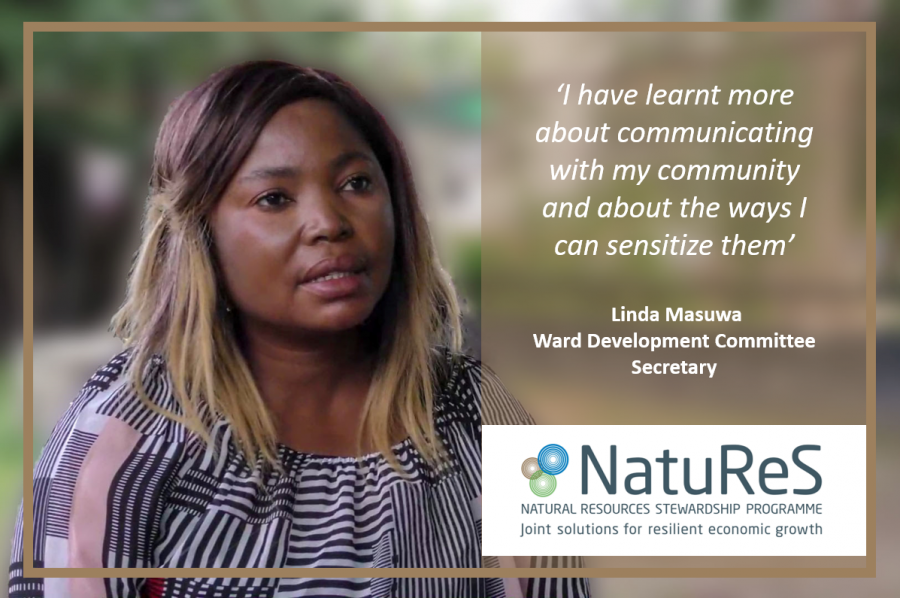
Linda Masuwa Ward Development Committee Secretary Copyright NatuReS Zambia
The ability of a community to mitigate against adverse effects of Covid-19 by preventing its spread is crucial in fighting the current pandemic. Especially the success of sensitization campaigns depends heavily on the adequate communication within local communities. NatuReS Zambia, in collaboration with the Lusaka Water Security Initiative (LuWSI) and Lusaka City Council (LCC), demonstrates how response measures can be grounded and effectively carried out under the leadership of community governance structures.
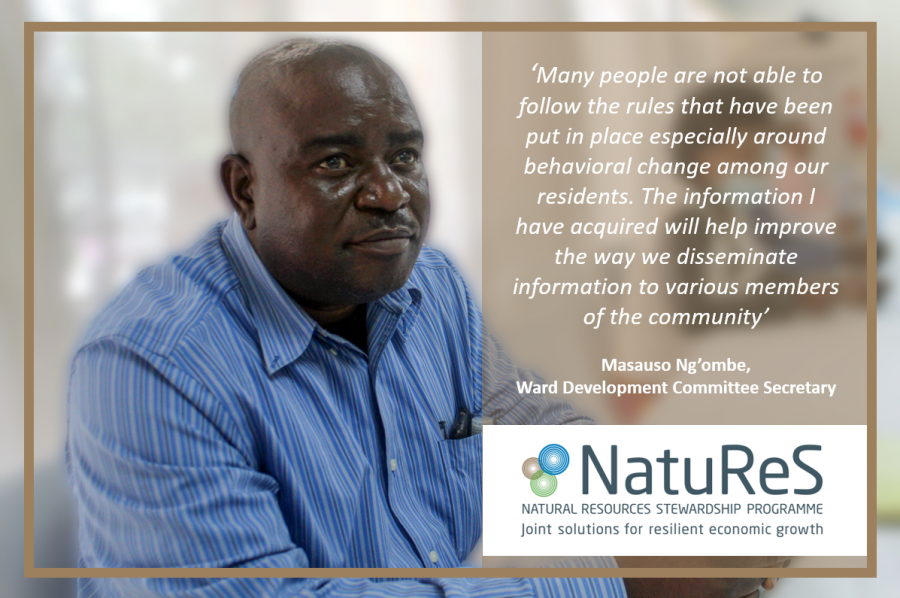
Building on the community engagement and empowerment processes implemented by LCC, Zambia Institute of Mass Communication (ZAMCOM) conducted a series of trainings for Ward Development Committees and Community Facilitators. Their capacity to build networks and effectively communicate with the communities is key in the implementation of Covid-19 prevention measures. The goal of the trainings is to build a pipeline of community-generated stories that link communities with media houses to give a practical expression of community views, experiences, lessons, ideas and knowledge on Covid-19. The more communities identify with awareness campaigns and prevention measures, the stronger is their ability to fight the spread of the pandemic.
This training series is also an important aspect of social change, as it represents an interactive avenue to communicate societal thinking and norms. It will help convey experiences from the perspective of communities and hence make it possible to better inform future interventions. Moreover, evaluating the effectiveness of measures and expanding lessons learnt and best practices within communities will ensure a stronger impact and eventually improve public health.
Masauso Ng’ombe Ward Development Committee Secretary Copyright NatuReS Zambia