Regional Exchange Workshop on Stewardship Multi-Stakeholder Partnerships: Reflections and Experiences from Lusaka on City-Wide Partnerships

From 9 to 11 September 2025, the Natural Resources Stewardship (NatuReS II) Programme hosted a regional exchange workshop in Lusaka, Zambia. Based on the experiences of the Lusaka Water Security Initiative (LuWSI), the event aimed to promote collaboration and learning on city-wide Stewardship Multi-Stakeholder Partnerships (SMSPs). It brought together 45 private sector, public sector and civil society partners from Zambia, South Africa, Tanzania, and Ethiopia working on inclusive, environmentally responsible development and natural resources governance. Key objectives of the event included sharing experiences, tools, and best practices on SMSP implementation across the partnering countries. The workshop was part of a series of NatuReS II regional exchanges to support the uptake and replication of proven approaches on SMSPs for a Just Transition and facilitate inter-country connections. 

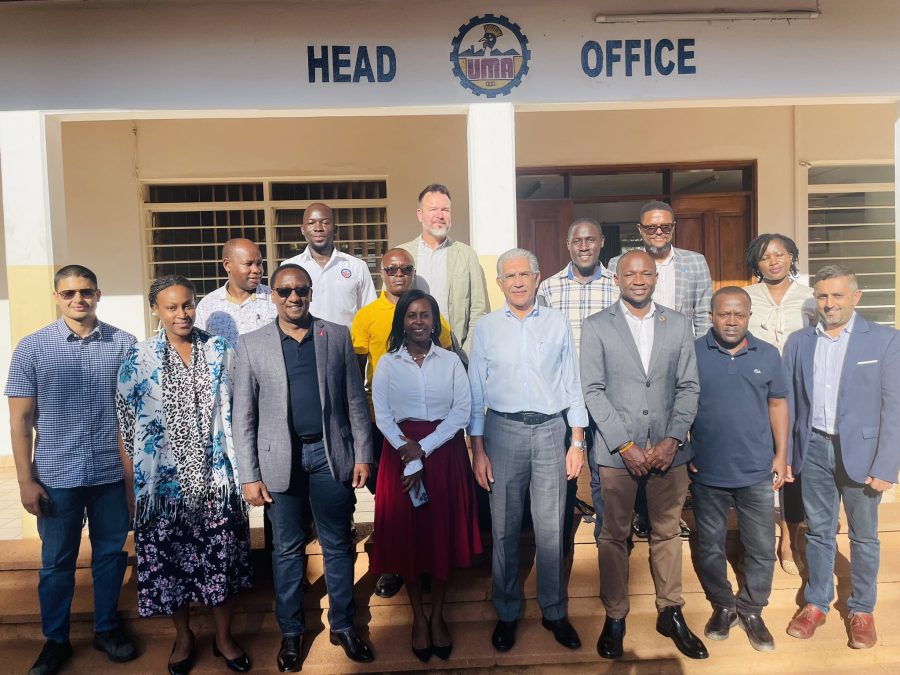
Group photo of the participants on Day 1 of the regional exchange in Lusaka. ©GIZ

Regional Workshop Opens with Focus on Partnerships for Water Security

The first day of the workshop kicked off with opening remarks emphasising the urgency of cross-country collaboration for sustainable natural resource management. Ms Adjoa Parker, NatuReS Country Coordinator in Zambia, welcomed participants, stressing that mutual learning and regional exchange are key to addressing shared environmental challenges and scale effective solutions. Ms Anke Peine-Ellis, GIZ Zambia’s Water and Energy Cluster Coordinator, underscored the climate risks facing Zambia, including extreme droughts and floods that threaten key sectors like agriculture and energy. She pointed to the collective achievements showcased at previous exchanges such as digital water governance in Tanzania and ecosystem-based solutions in Ethiopia as examples of the valuable regional knowledge-sharing this event would foster.

Ms Yanko Tamandani Mataya, LuWSI Board Chair and WaterAid Zambia Country Director, highlighted LuWSI’s major accomplishments, including the launch of a digital water atlas and outreach that has benefited over 259,000 community members. She emphasised that LuWSI’s success lies in turning a shared vision into measurable impact, offering a replicable model for other cities. Last but not least, Eng. Romas Kamanga, Permanent Secretary of the Ministry of Water Development and Sanitation, took to the stage, calling for integrated solutions that connect water security to sectors such as health, energy, and industry. He praised the SMSP model as an effective way to deliver Zambia’s Vision 2030 and achieve SDG 6 on clean water and sanitation. He then officially opened the workshop, urging participants to engage fully and take lessons from Zambia back to their own countries.

Following the opening, the exchange presented highlights and key experiences from the partnerships in all four NatuReS II countries to enable two-way learning. Find out more on all partnerships here. This overview also illustrated how SMSPs, coupled with inclusive governance, drive socio-ecological transformation in their local contexts. 

Learning About the Journey of LuWSI—Building a City-wide Water Security Partnership

The afternoon sessions delved further into the work and development of the LuWSI partnership. To provide context on the process, Ms Wyness Zimba, an Advisor from the NatuReS team in Zambia, presented the Natural Resources Risk and Action Framework (NRAF), the approach guiding the facilitation of our partnerships. It consists of five phases: Prepare, Assess, Commit, Act, and Scale/Exit. She stressed that these are not linear but iterative and that sustainability must be integrated from the start rather than being an afterthought.

Following this, Mr Nathan Nyambe from the LuWSI secretariat shared further details on the LuWSI platform, which unites over 40 partners across sectors to improve water security in Lusaka. Formally registered in 2022, LuWSI operates under a governance structure led by a General Assembly and Board of Directors, with strategic goals focused on collaboration, capacity building, financial sustainability, and collective action. Mr Nyambe highlighted key projects such as wellfield protection, green cities adaptation, and solid waste management, demonstrating how the platform tackles complex water challenges through coordinated efforts.

The session concluded with an interactive walk-through of LuWSI’s development since 2016, where participants explored milestones and lessons learned. In a plenary reflection, participants shared their key takeaways and acknowledged LuWSI’s achievements in gaining recognition and delivering real benefits to communities and the environment through robust governance and funding arrangements. The group agreed that strong stakeholder buy-in through shared goals, resources, time and endurance are essential for applying and scaling the NRAF framework.

Strengthening Sustainability and Governance of SMSPs

The second day of the conference delved further into the details of facilitating lasting and inclusive partnerships with committed participation of the private sector. It opened with a session on sustainability and governance of SMSPs, led by Mr Kasenga Hara, Coordinator of the LuWSI Secretariat. He traced LuWSI’s journey from its early days under GIZ to its current structure as an independent entity hosted by NWASCO and outlined various funding strategies tested over time. These included membership fees, event sponsorships, knowledge monetisation, and project-based financing amidst challenges such as regulatory compliance, limited core funding, and economic constraints. To ensure LuWSI’s long-term viability, Mr Hara emphasised the need for innovation, diversified revenue models, and even stronger partner engagement.

Following the presentation, participants broke into country groups to reflect on LuWSI’s efforts as well as the state of their own partnerships with regards to sustainability. Across countries, common themes emerged: the importance of clear governance, stakeholder alignment and compelling value propositions for members, sustainable financing and business models, and tangible results. However, maintaining momentum and engagement, ensuring inclusivity, mobilising resources, and balancing government support with autonomy remain key challenges.

Empowering communities and advancing inclusivity: integrating women and marginalised groups in SMSPs

The second topic of the day focused on inclusivity and delivering just outcomes in SMSPs. Mr David Nonde Mwamba from NatuReS Zambia opened the session, reflecting with participants on the human rights-based approach and highlighting that inclusion must be operationalised early and tied to formal governance systems. Next, Evelyn Musonda from Lusaka City Council showcased the key role of Ward Development Committees (WDCs) in local governance. Legally mandated, WDCs link communities to councils, support local planning, and ensure that marginalised voices are heard. Partnerships with organisations like WWF and the Zambia Agency for Persons with Disabilities have strengthened WDCs’ capacity, embedding gender, disability, and climate considerations into local development plans.

A video from Kamanga Ward featured Fatima Nkhuwa, a WDC member, who shared how training helped communities take ownership of development initiatives like road grading and waste management. She stressed empathy, accountability, and community cohesion. The session concluded by reaffirming that durable inclusion requires aligning social rights with institutional responsibilities through ongoing dialogue and accountability.

Spotlight on private sector participation in SMSPs

The third session explored the role, motivations, and experiences of the private sector in Stewardship Multi-Stakeholder Partnerships. Since starting in 2016, companies like Zambia Breweries, Coca-Cola, and British American Tobacco (BAT) joined LuWSI, contributing to activities such as catchment protection, sanitation, and awareness campaigns. While initially difficult, Sandra Ngozo from the LuWSI Secretariat shared how private sector participation gradually gained momentum through evidence-based advocacy and persistent engagement. She also emphasised that private sector contributions are not limited to funding. Companies also helped co-develop strategies, hosted dialogues, and sponsored joint initiatives. As participation widened to include local utilities and waste management firms, the platform demonstrated that stewardship could deliver both community impact and business value. Sustained engagement, she noted, was driven by trust, recognition, and alignment with shared goals.

Building on this, Ms Sophia Mapulanga from BAT Zambia presented how the company applies the Alliance for Water Stewardship (AWS) Standard to integrate water stewardship into its daily operations. Key measures included internal awareness, water monitoring, and infrastructure upgrades. Since implementing an environmental management system in 2021, BAT Zambia achieved zero landfill waste and AWS certification by 2023, exceeding its water reduction targets. Both speakers concluded that effective stewardship hinges on long-term commitment, clear standards, and collective action across sectors.

In a panel discussion facilitated by Ms Ngozo, private sector representatives delved further into the business case for engaging in stewardship partnerships like LuWSI. It featured Ms Bridget Bwembya from Zambian Breweries, Ms Sophia Mapulanga from BAT Zambia, and Ms Carol Sampa from the Lusaka South Multi-Facility Economic Zone (LSMFEZ).

Panellists and moderator of the discussion on private sector participation in SMSPs (from left to right): Ms Sophia Mapulanga (BAT Zambia), Ms Carol Sampa (LSMFEZ), Ms Bridget Bwembya (Zambian Breweries) and Ms Sandra Ngozo (LuWSI). ©GIZ
  • Ms Bwembya shared how Zambian Breweries uses platforms such as LuWSI to deliver water-related projects aligned with corporate sustainability goals, e.g. water access initiatives in the George Compound or a recycling programme. She stressed the need for long-term planning and clear roles to ensure continuity.
  • For BAT, LuWSI has been instrumental in opening doors and building connections to address joint water issues and co-implement environmental initiatives like reforestation. To anchor stewardship within companies, Ms Mapulanga pointed to the clear monetary benefit of saving and recycling water and noted how this was enforced by embedding sustainability in corporate KPIs.
  • For the LSMFEZ, the value of engaging in water stewardship is clear. Dependant on ground water and with more development planned, responsible and efficient water management is key for resilient economic development and bringing investment to the zone. Having signed a Memorandum of Understanding with LuWSI, Ms Sampa outlined how the LSMFEZ is benefitting from the shared experience and partnering with LuWSI to improve water reliability and wastewater management, e.g. through pre-treatment facilities and addressing water losses.

All panellists agreed that water stewardship requires more than compliance – it demands strategic partnerships, early stakeholder involvement, and community engagement to achieve lasting, shared benefits. Key takeaways for the audience included the importance of speaking the language of private investors, aligning environmental initiatives with legal mandates, and linking stewardship to business outcomes.

Connecting Across Countries

In addition to all the thematic input and exchange on the many different aspects of building effective multi-stakeholder partnerships, the exchange provided plenty opportunities for the partners to connect across sectors and countries. An interactive marketplace gave the Zambian partners space to display their initiatives through visual material and short presentations. Booths were hosted by LuWSI, GIZ NatuReS as well as many partner organisations such as WaterAid, WWF, Lusaka City Council, Lusaka Water Supply and Sanitation Company, Coca-Cola Beverages Zambia. Participants rotated in between, engaging in informal discussions and peer-to-peer learning. Additionally, the event featured an interactive “speed-dating” exercise to encourage direct exchange on experiences, joint challenges, and potential partnerships. Participants also continued discussions at the evening’s networking dinner.

Site visits to the Lusaka South Multi-Facility Economic Zone

On the final day of the exchange, participants embarked on a field visit to deepen their understanding of private sector involvement in sustainable water and resource management. The day began at the Lusaka South Multi-Facility Economic Zone (LSMFEZ), where Mr Maxwell Zulu, Director of Planning & Compliance, delivered a presentation on the zone’s operations, compliance framework, and investment plans. Participants engaged actively, highlighting the significant potential of such industrial hubs to advance both environmental and economic objectives.

This was followed by site visits to two private sector companies within LSMFEZ that have been consistent, willing and taken initiatives like the pursuit of the AWS certification. At the BAT Zambia factory, participants were shown the packaging process and learned about the company’s environmental compliance and waste management practices. Next, at Trade Kings Home Care Limited, they toured the soap and detergent plant, gaining insights into production processes and the site’s approach to water efficiency and reuse.

The day concluded with a reflection session. Participants each identified two concrete actions they would pursue upon return from the exchange – ranging from initiating sustainability programs, strengthening partnerships, and mobilising stakeholders, to replicating SMSP governance models and business planning. These personal commitments underscored a strong intent to apply lessons learned in their local contexts.

Exchange participants at the Trade Kings plant within the LSMFEZ economic zone. ©GIZ

NatuReS Showcases Regional Stewardship at the 11th SADC Multi-Stakeholder Water Dialogue

Group photo of the SADC Multi-Stakeholder Water Dialogue in Maseru. ©GWPSA

This September, the 11th SADC Multi-Stakeholder Water Dialogue took place in Maseru, Lesotho. It convened decision-makers, technical experts, and development partners from across the Southern African Development Community (SADC) under the theme “Water Security, Innovation, and Nexus Action: Watering and Enabling Regional Economic Development Corridors for Transformation in SADC”. The event was jointly organised under the SADC-GIZ Transboundary Water Management (TWM) project, in partnership the SADC Secretariat and the Global Water Partnership Southern Africa (GWPSA). It aimed to strengthen cooperation in addressing shared water security challenges and advancing regional resilience.

The Dialogue was graced by a number of high-level dignitaries whose remarks framed the regional agenda. For instance, the guest of honour, Honourable Mohlomi Moleko, Minister of Natural Resources of the Kingdom of Lesotho, emphasised in his keynote address that water is indispensable to regional value chains and integration. He stressed that Lesotho, despite its small size, commits to playing a pivotal role in regional water and energy security. His remarks called for enhanced cooperation and infrastructure investment to harness water resources as drivers of economic development.

Participants during the SADC Multi-Stakeholder Water Dialogue programme. ©GWPSA

Highlighting the potential of NatuReS’ Stewardship Multi-Stakeholder Partnerships for regional water security

Representing the GIZ Natural Resources Stewardship (NatuReS II) Programme, Ms Adjoa Parker, Country Coordinator for Zambia, presented on “Multi-Stakeholder Stewardship for Water Security: From Urban Hubs to Regional Corridors”. She highlighted the role of Stewardship Multi-Stakeholder Partnerships (SMSPs) in improving water security and resource governance, with a special focus on private sector engagement and how these approaches could be applied at regional level.

She emphasised that neither government nor business can solve water-related challenges alone. Instead, effective and sustainable solutions only emerge when public, private, and civil society actors take shared responsibility for protecting natural resources: “Stewardship means taking care of something that you do not own…ensuring that future generations inherit resources that are sustainably and equitably managed”.

She pointed out that solving water challenges demands shared ownership of risks and solutions across the public, private, and civil society spheres. Using examples from all four NatuReS II implementation countries, as well as a case study on Zambia’s Lusaka Water Security Initiative (LuWSI), she demonstrated how stewardship approaches support WEFE initiatives by enhancing water, energy and food security, as well as supporting healthy ecosystems. She also stressed that economic development can be balanced with ecology and social issues, especially when using the SMSP approach. Furthermore, she discussed how these approaches can be employed and scaled at various levels – including special economic zones, cities, catchments, regions, and corridors, producing sustained impact while aligning with regional objectives.

Ms Adjoa Parker, Country Coordinator for NatuReS II Zambia, presenting on Multi-Stakeholder Stewardship for Water Security. ©GWPSA

Since 2013, NatuReS and its predecessor, the International Water Stewardship Programme (IWaSP), have collaborated with over 180 partners to facilitate over 50 partnerships. Overall, they leveraged private-sector investments worth over EUR 300 million and improved the resilience and livelihoods of millions of people across the SADC region and beyond.

By collaborating closely with the SADC Secretariat, national ministries, and cooperating partners, NatuReS II reaffirms its commitment to embedding stewardship as a cornerstone of water security, regional integration, and sustainable development within the context of the WEFE and a Just Transition.

Ethiopia Circular Economy Hotspot 2025: Advancing Sustainable Development Through the “Waste to Wealth” Movement

Group picture of participants of the Ethiopia Circular Economy Hotspot 2025. ©Kuru Captures

On October 1, 2025, Ethiopia took center stage in Africa’s circular economy movement by hosting the Circular Economy Hotspot 2025 in Addis Ababa. The event was held under the theme “Waste to Wealth: Advancing Sustainable Development through Circular Innovation”. It gathered hundreds of delegates from Ethiopia and abroad, including government officials, business leaders, entrepreneurs, development partners, and civil society representatives.

Organised by the Federal Environmental Protection Authority (EPA), the Hotspot event provided a platform to showcase Africa’s growing momentum in turning waste into valuable resources, promoting sustainable production and consumption, and fostering green economic transformation. GIZ, through the Natural Resources Stewardship Programme (NatuReS II), is proud to have contributed both technical and financial support for the organisation and facilitation of the event, helping to catalyse the partnerships and innovations that will shape Ethiopia’s sustainable future.

In her welcoming remarks, H.E. Eng. Lelise Neme, Director General of the EPA, emphasised Ethiopia’s strong commitment to circular economy principles as part of its broader Climate Resilient Green Economy strategy. Hosting the Circular Economy Hotspot, she noted, demonstrates Ethiopia’s leadership and readiness to collaborate regionally in achieving a more sustainable and resource-efficient future.

The event featured two high-level panel discussions exploring key drivers of circular transformation: “Enabling Environments for a Circular Economy” and “Fostering Partnerships to Unlock Circular Economy Potential.” These sessions highlighted the importance of policy frameworks, financing mechanisms, and cross-sectoral collaboration in accelerating circular innovation across Africa.

A special event highlight was the circular economy hackathon, which brought together 49 innovators to develop practical solutions for turning waste challenges into business opportunities. Further, 25 exhibitors showcased their contributions to circular economy development in Ethiopia – from recycling enterprises to green technology start-ups. A jury recognised the top three start-up companies and hackathon ideas, awarding prize money to further advance their innovations.

Delivering keynote remarks, Mr James Njeru, Component Manager of NatuReS Ethiopia, underlined the role of partnerships in driving systemic change.

“Together, through the power of stewardship partnerships, we will build a circular economy that is not only environmentally sustainable and economically viable, but also socially just, ensuring that Ethiopia’s transformation benefits all its people.” 

GIZ, through its NatuReS II programme, has been a close partner in Ethiopia’s circular economy transition. Beyond financial support to the Hotspot, GIZ has provided technical assistance to the development of the National Circular Economy Roadmap. This serves as a blueprint for reimagining how Ethiopia’s 120 million citizens interact with natural resources and create value sustainably.

Ethiopia hosting the Africa Circular Economy Hotspot 2025 is a milestone that demonstrates that the journey toward a circular economy is well underway. It shows that through innovation, collaboration, and shared vision, Africa can turn its “waste to wealth” and unlock new pathways to prosperity.

Water Stewardship for Economic Resilience – Updates from the Collaboration in Rosslyn

In South Africa, the NatuReS programme continues to drive efforts to establish a stewardship multi-stakeholder partnership (SMSP) for the Rosslyn Industrial Area (RIA). SMSPs are participatory formats in which the public sector, private sector and civil society develop joint solutions for more sustainable management and use of natural resources. In this context, NatuReS supports the ongoing work in the Rosslyn Improvement District (RID) led by the Capital City Business Chamber (CCBC) towards a more sustainable way of production and improved water efficiency. The goal for the RIA is heading towards an Eco-Industrial Park (EIP) approach. Rosslyn is located in the northern part of the City of Tshwane (Pretoria) and is home to major industries including a concentration of automotive industries and large companies such as BMW, Nissan, South African Breweries, Renault, TATA, and Nampak. More than 200 businesses operate from here and provide employment to more than 20,000 workers.

GITEC consultant and NatuReS team observing a company’s onsite water treatment plant and effluent process flow. ©GIZ

Assessing the state of water metering

To support measures for improved water security in the RIA, NatuReS contracted the consultancy GITEC, which specialises in digital water and wastewater measurement as well as water resource efficiency. For a week in early August, the partners went on several site visits to discuss solutions for the state of water and wastewater metering and the potential for more resource efficient ways of production. The engagements included the City of Tshwane Municipality as well as nine medium, large, and multinational companies from several sectors active in the RIA, such as automotive, leather processing, packaging, train maintenance, beverages, and feed production.

The City of Tshwane expressed their interest in collaborating around the digitisation of meters for water supply as well as wastewater discharge quality. Since so far, the reading of meters and the assessment of effluent quality happens manually, which is labour-intensive, costly, and time-consuming. On the companies’ side, all meter their water supply and treat it, if necessary, before discharging to the municipal sewer system. While some companies already use digital equipment to assess their water consumption, some expressed interest in adopting such technology.

Wastewater reuse as significant potential for Rosslyn

Beyond metering, all companies are very keen to explore opportunities for water reuse, both internally and with other businesses in the area. Given the magnitude of industrial demand, economically feasible reuse schemes could yield substantial benefits for reliability, cost control, and environmental performance. For example, one company’s treated wastewater could become the process water of another company and does not necessarily need to be of potable quality. This same concept could also be explored for water used for heating and cooling.

This appetite for collaboration illustrates the growing interest in industrial symbiosis, a form of industrial ecology where companies collaborate to exchange resources like materials, energy, and water to reduce waste and improve efficiency. Therefore, NatuReS together with the CCBC, is planning to organise a workshop for interested companies to strategically discuss these topics and develop joint projects.

On-site water treatment plant of a company located in the RIA. ©GIZ

Water security – a question of economic stability for South Africa

These local-level efforts are particularly important as South Africa faces significant and interlinked natural resource pressures that threaten long-term economic stability and social cohesion. Water, in particular, has emerged as one of the most critical pressure points. Climate change, ageing infrastructure, and mounting demand from both industry and growing urban populations are further exacerbating the already chronic water stress.

Especially the Gauteng Province, home to the administrative capital of Pretoria and the economic capital of Johannesburg, is projected to face serious challenges in the future due to limited water sources and a rapidly growing population. Concurrently, the province is the economic engine of the country contributing to over 34% of South Africa’s total GDP, and accounting for nearly 7% of Sub-Saharan Africa’s GDP. Therefore, ensuring long-term water security is crucial to maintaining this status.

Partnerships to align industrial growth with responsible resource management

These implications have also been understood in Rosslyn, where the seeds of collaboration are already being planted. By bringing businesses, government, and civil society to the same table, the SMSP approach is proving that sustainable water security and industrial competitiveness are not opposing, but mutually reinforcing goals. Building on work happening in the East London IDZ, Rosslyn can demonstrate how South Africa’s economic hubs can successfully align industrial growth with responsible resource management. It is a powerful reminder that a Just Transition is not only possible, but achievable when we act together.